Communicate your research

Creating effective slides

Eric Largy

ARNA, INSERM U1212, CNRS UMR 5320, Université de Bordeaux

UFR des Sciences Pharmaceutiques, Université de Bordeaux

April 20, 2026

Should we not trust
people using slides?

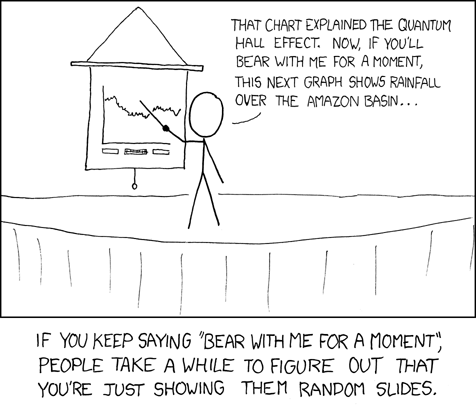
Random slides

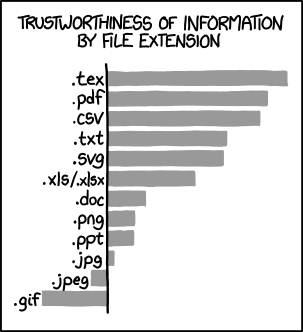
Low quality and trustworthiness
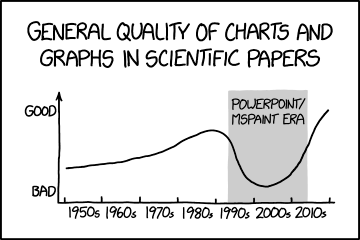
The worst are graphs with qualitative, vaguely-labeled axes and very little actual data

I have never been lied to by data in a .txt file which has been hand-aligned

xkcd.com/1945 xkcd.com/1301

Most slides are ineffective

They detract from what the presenter is saying

They should enhance what the presenter is saying

12 random slides

site:(u-bordeaux.fr OR cnrs.fr OR inserm.fr) filetype:pptx

Would you say the same about your slides?

  • You should remove some text
  • You think so?
  • It’s too much
  • But I’ve removed so much already!

Find this presentation on slides.largy.fr

To optimize slides,
we need an objective

Where do we want to go?

Effective communication = spreading your message

The audience must

  • understand the message

Effective communication = spreading your message

The audience must

  • pay attention to
  • understand the message

Effective communication = spreading your message

The audience must

  • pay attention to
  • understand the message
  • do something with it

Information is not a message

        Information

          Message

Information is not a message

        Information

⬇️ Interpretation ⬇️

          Message

Information is not a message

            What?

⬇️ Interpretation ⬇️

          So what?

Why should I care?

What did you find in your research?

Why should I care?

What did you find in your research?

So what? Why is it important? What does it mean? What can we do with it?

Why are you even talking about it?

I need to present
my whole PhD thesis
in n minutes!

Optimize under constraints

Optimize to get the maximum across

The audience must

  • pay attention to
  • understand
  • get something out of

the message

Optimize to get the maximum across

The audience must

  • pay attention to
  • understand
  • get something out of

a maximum of messages under constraints

This requires ruthless selection

Optimize to get the maximum across

This requires ruthless selection

Too much on the slide = people will stop looking at it!

4 rules to optimize
your communication

Reminder

  1. Have messages

Adapt to your audience

  1. Have messages
  2. Adapt to your audience

You        ➨      Audience

Focus your efforts on what you can control: audience is not one of them

Adapt to your audience

  1. Have messages
  2. Adapt to your audience

You        ➨      Audience

Focus your efforts on what you can control: audience is not one of them

Communication is about them, not you

Think like the audience, not a speaker

Think of how much text is too much

  • on other people’s slides
  • on your own slides

Think about the audience!

Think like the audience, not a speaker

  • You should remove some text
  • You think so?
  • It’s too much
  • But I’ve removed so much already!

Think about the audience!

… and not about your PI

Get rid of the noise

  1. Have messages
  2. Adapt to your audience

You        ⤳      Audience

This is a very long text block, which is not very effective to communicate a message. It is better to have a few words on the slide and explain them verbally. If you have too much text, people will stop looking at it and will not understand the message. It is therefore useless to have a lot of text on the slide, as it will not be read and will not help to communicate the message. Eventually, it will even detract from the message, as it will be a distraction for the audience. If you have read this far, you have probably not been listening to what I am saying, which is not good communication on my part. You may think that you need to have a lot of text on the slide to be able to explain it, but this is not the case. You can have a few words on the slide and explain them verbally, which will be much more effective to communicate the message. You should know what you are talking about and do not need notes on the slide to explain it. The slide is not for you, it is for the audience. Having text in bold does not make it better if its embedded in a text block or long sentence.

Get rid of the noise

  1. Have messages
  2. Adapt to your audience
  3. Maximise the signal/noise ratio

You        ➨      Audience

This is a very long text block, which is not very effective to communicate a message. It is better to have a few words on the slide and explain them verbally. If you have too much text, people will stop looking at it and will not understand the message. It is therefore useless to have a lot of text on the slide, as it will not be read and will not help to communicate the message. Eventually, it will even detract from the message, as it will be a distraction for the audience. If you have read this far, you have probably not been listening to what I am saying, which is not good communication on my part. You may think that you need to have a lot of text on the slide to be able to explain it, but this is not the case. You can have a few words on the slide and explain them verbally, which will be much more effective to communicate the message. You should know what you are talking about and do not need notes on the slide to explain it. The slide is not for you, it is for the audience. Having text in bold does not make it better if its embedded in a text block or long sentence.

Get rid of the noise

  1. Have messages
  2. Adapt to your audience
  3. Maximise the signal/noise ratio

You        ➨      Audience

Get rid of:

  • Too much text
  • Too small text

Get rid of the noise

  1. Have messages
  2. Adapt to your audience
  3. Maximise the signal/noise ratio

You        ➨      Audience

Get rid of:

  • Too much text
  • Too small text
  • Background colors

Get rid of the noise

  1. Have messages
  2. Adapt to your audience
  3. Maximise the signal/noise ratio

You        ➨      Audience

Get rid of:

  • Too much text
  • Too small text
  • Background colors
  • Logos

Get rid of the noise

  1. Have messages
  2. Adapt to your audience
  3. Maximise the signal/noise ratio

You        ➨      Audience

Get rid of:

  • Too much text
  • Too small text
  • Fancy transitions and special effects
  • Background colors
  • Logos

Get rid of the noise

Do not include something just because you can

  • It attracts the attention to something else than the message
  • Visible technology is noise

Get rid of the noise

Time used to process something useless is not used processing the message

There is no in-between, it is either:

  • Useless: get rid of it
  • Useful: keep it

Filter out the noise

But you cannot anticipate all of it

Increase the signal

Maximize signal with redundancies

  1. Have messages
  2. Adapt to your audience
  3. Maximise the signal/noise ratio
  4. Use effective redundancy

You        ⇉      Audience

Spread your message by both
verbal and non-verbal channels

  • Slides should be self-sufficient
    • Audience should get the point without listening
  • Speech should be self-sufficient
    • Audience should get the point without looking at the slides

By combining both, you get two chances to get the message across

Redundancy must be effective

  1. Have messages
  2. Adapt to your audience
  3. Maximise the signal/noise ratio
  4. Use effective redundancy
  • Do not write your whole speech on the slide
    • It becomes noise for the verbal channel

You        ⇉      Audience

Redundancy must be effective

  1. Have messages
  2. Adapt to your audience
  3. Maximise the signal/noise ratio
  4. Use effective redundancy
  • Do not write your whole speech on the slide
    • It becomes noise for the verbal channel
  • A drawing brings complementarity

           Verbal You        ⇉      Audience          Non-verbal

This is the strongest reason
to use slides

How to not design slides

Just throw as much as possible on the slide without any thought

Slides often have too much text

Why do we use so much text?

  • Slides are a cheatsheet for the speaker
    • it should be for the audience
  • Slides are a written report
    • but is neither a good report nor a good presentation
  • Slides were prepared hastily
    • Ctrl-C + Ctrl-V
  • Slides are notes for students
    • then maybe notes should be distributed as a handout

It’s better than nothing, right?

Or course not!

A bad slide is noise

  • You have no time to make good slides?
    • Don’t make slides
  • Your PI wants you to present your research to an unexpected guest?
    • Do not frantically gather a huge stack of slides
    • You have no time
    • You have other priorities

Slides are not the presentation

  • You need to plan ahead
    • Audience?
    • Time?
    • Room?
    • Message?
  • You need to prepare the content
  • You need to practice

Write down your ideas

On a single piece of paper:

  • Need
  • Task
  • Main message preview
  • Main points and transitions
  • Review
  • Conclusion
  • Close

Write down your ideas

Make it clear what are your:

  • Problem
  • Approach
  • Main message = the one thing you want the audience to remember

Practice your presentation

  • At least once
  • How long does it take?
  • Do you master the vocab?
    • Technical terms
    • French/English for non native speakers

Slides are only effective redundancy

A presentation must be

  • Well planned

  • Well structured

  • Well delivered

These are your priorities, slides are not

Do the content first

Slides are not the presentation

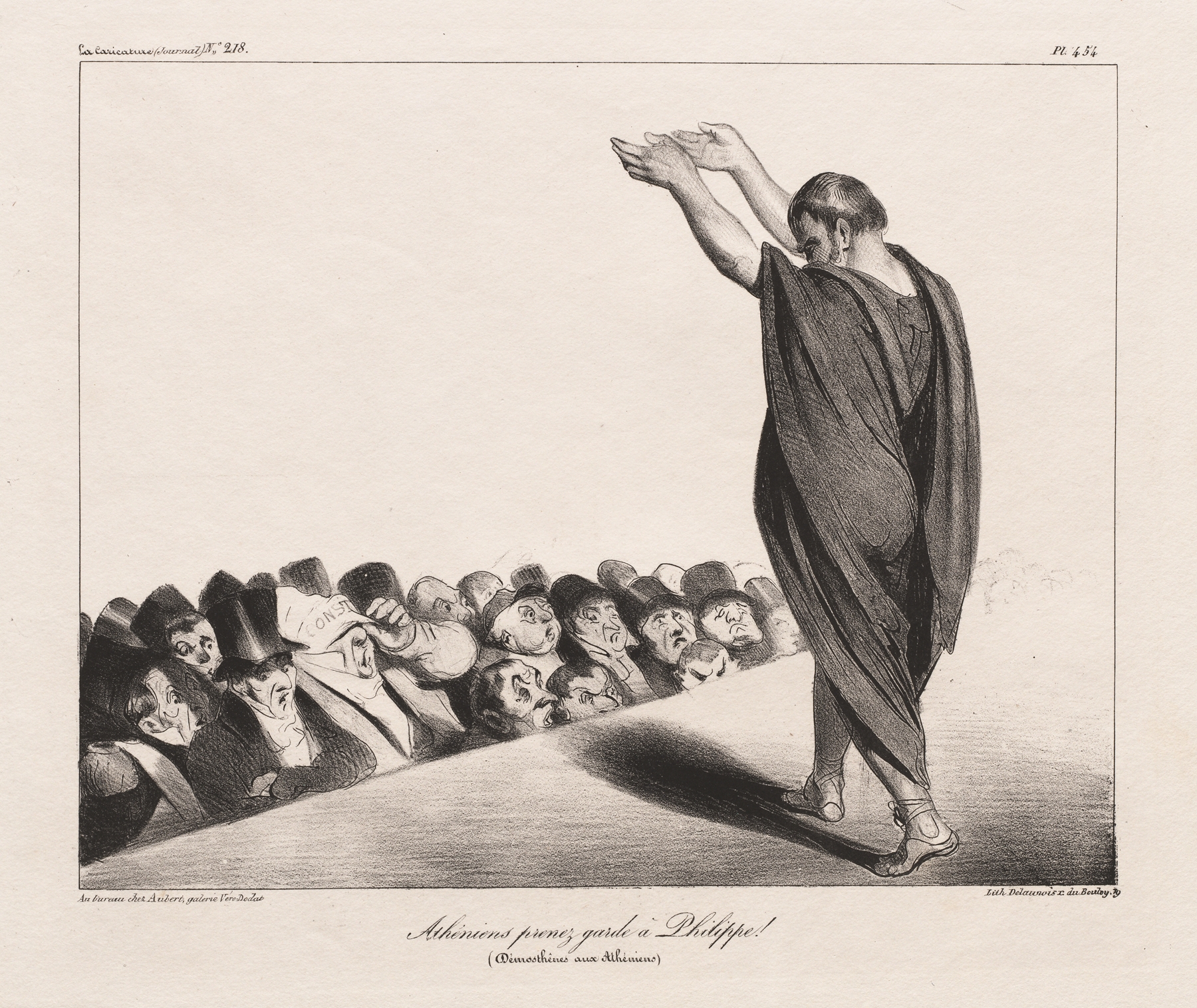
Honoré Daumier, 1835

One message = one slide

One slide = one message

Convey each subpoint of your message with a slide
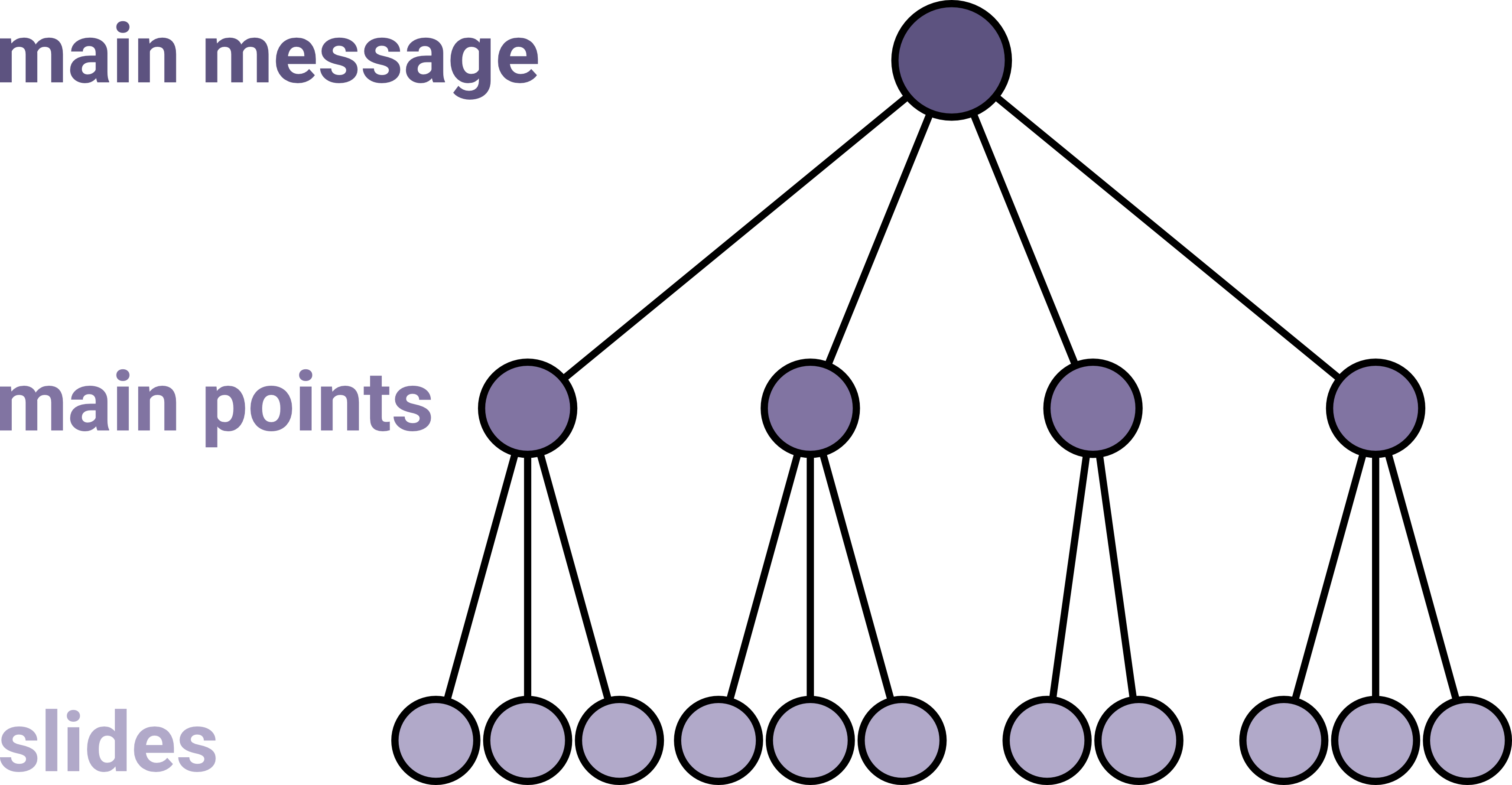
Make the titles your messages

Use the title to state your message

Audiences read titles
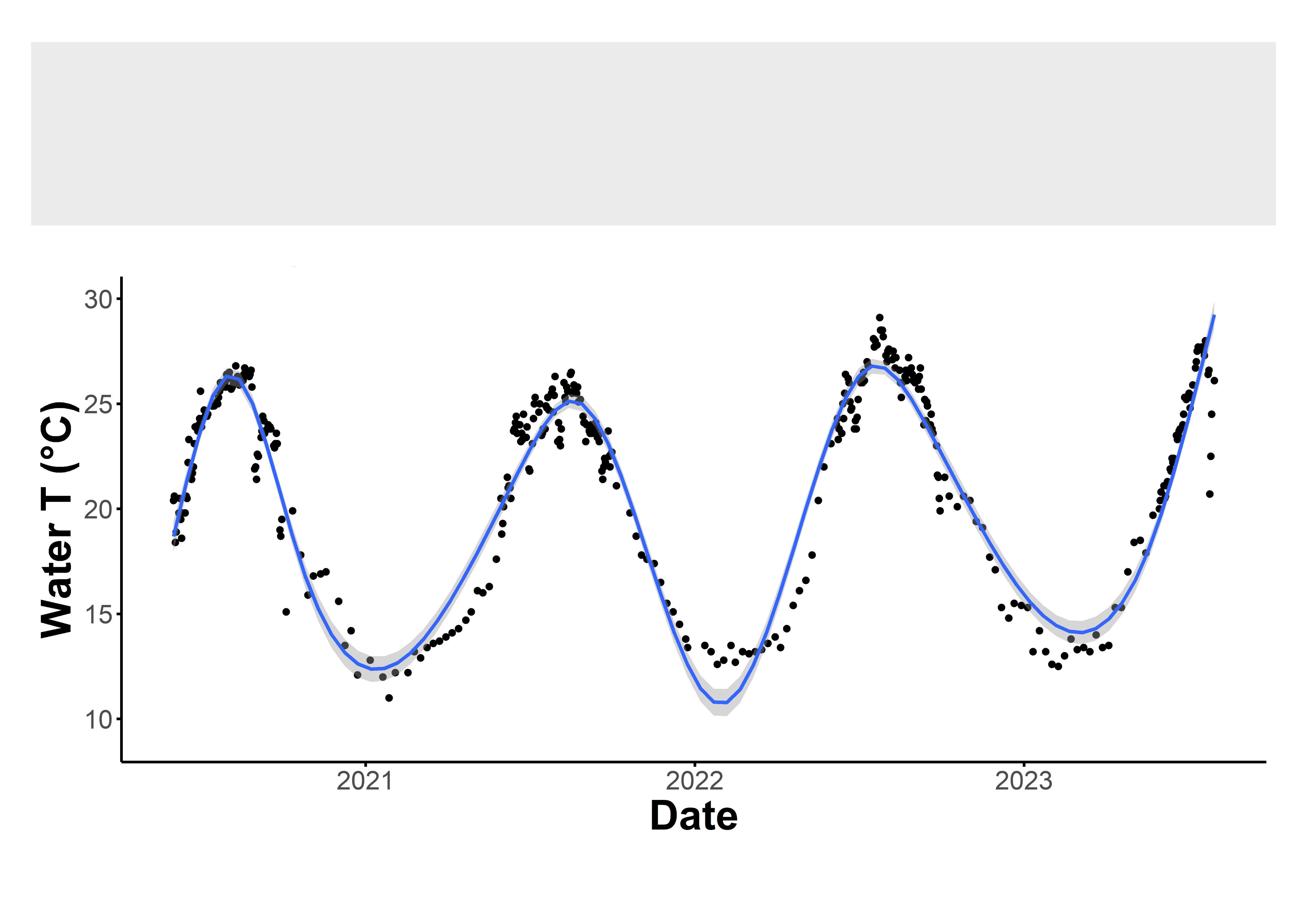
Use the title to state your message

Structure related

Not informative
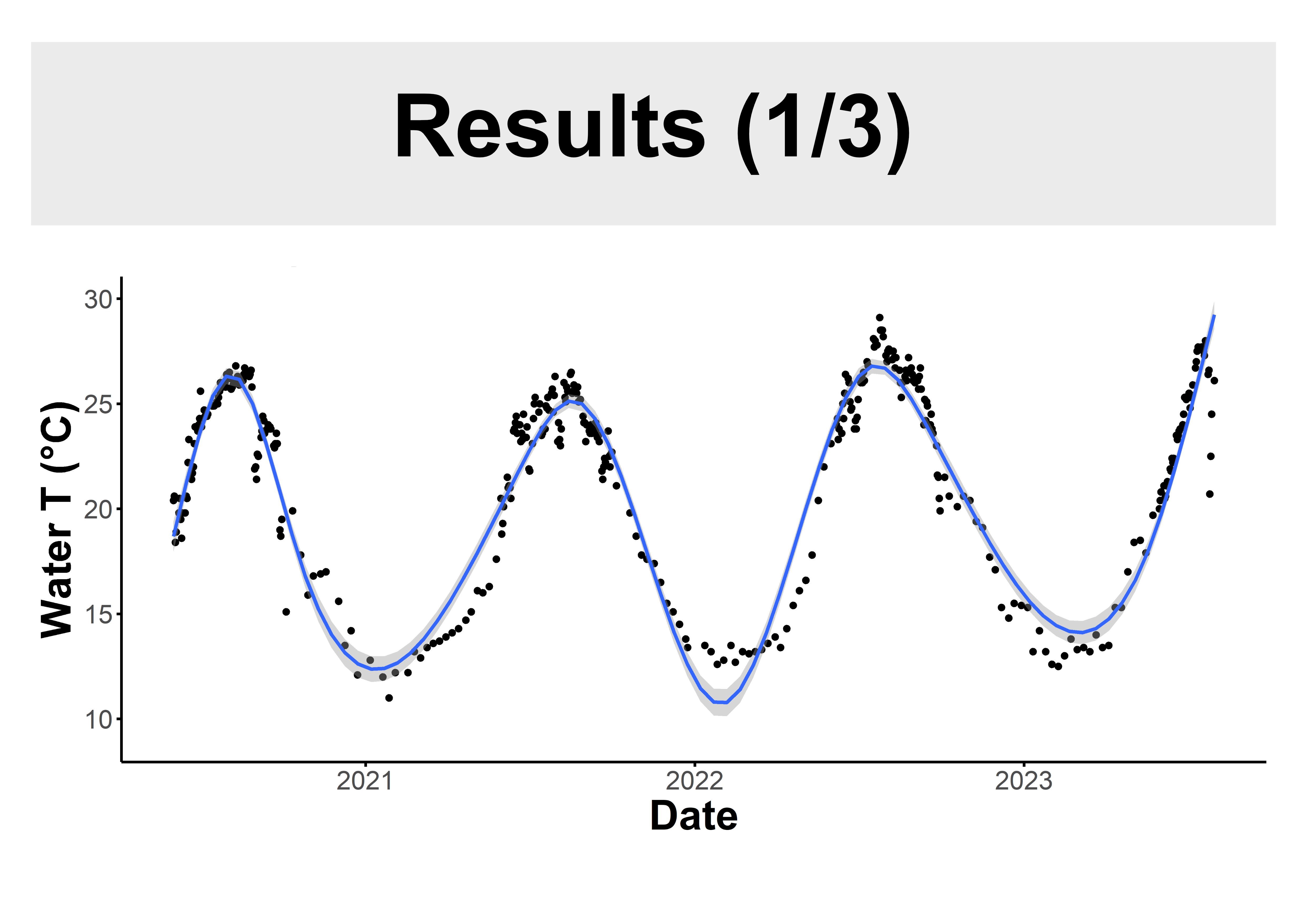
Use the title to state your message

What?

Inneffective redundancy
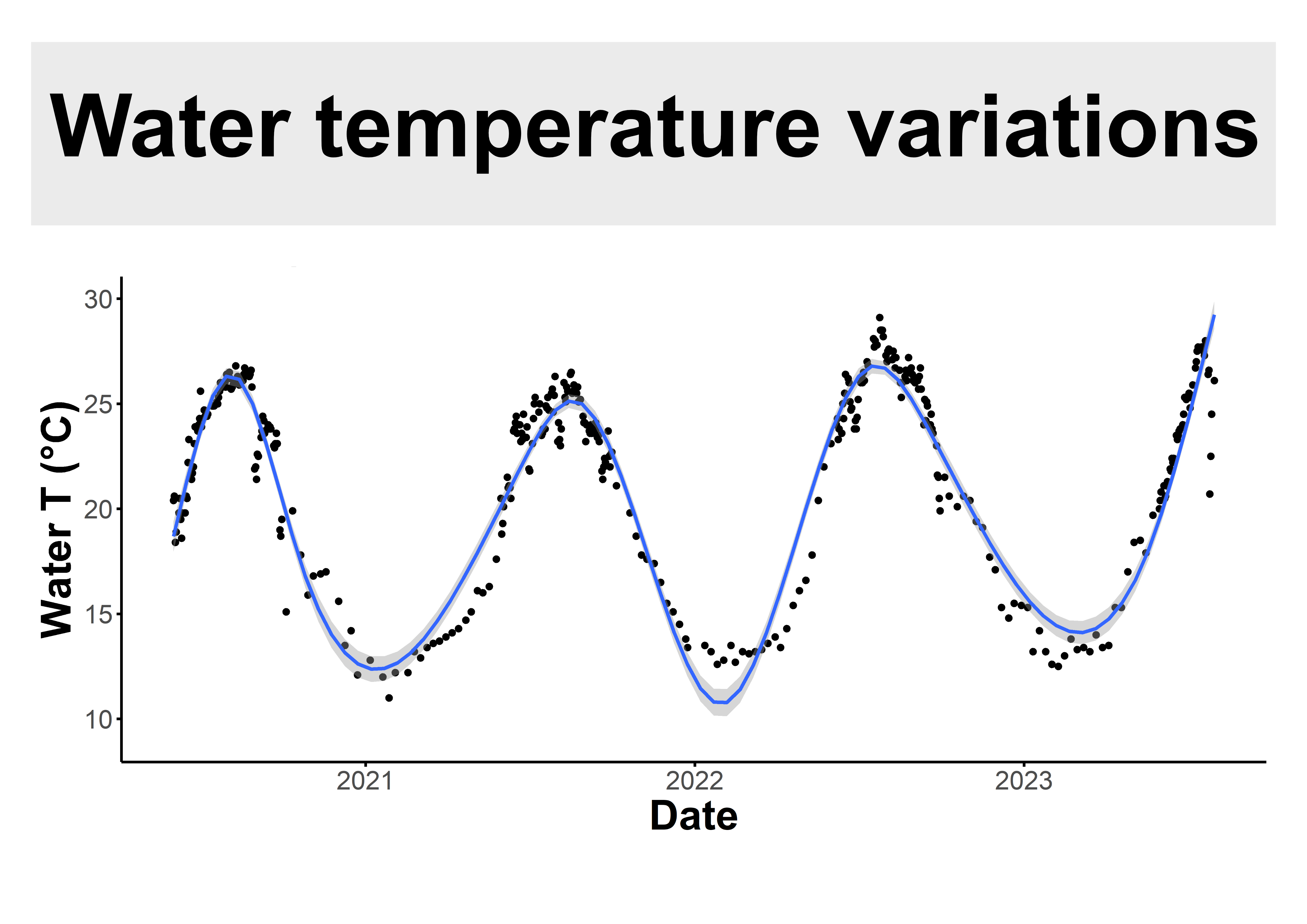
Use the title to state your message

So what?

Gets the message across
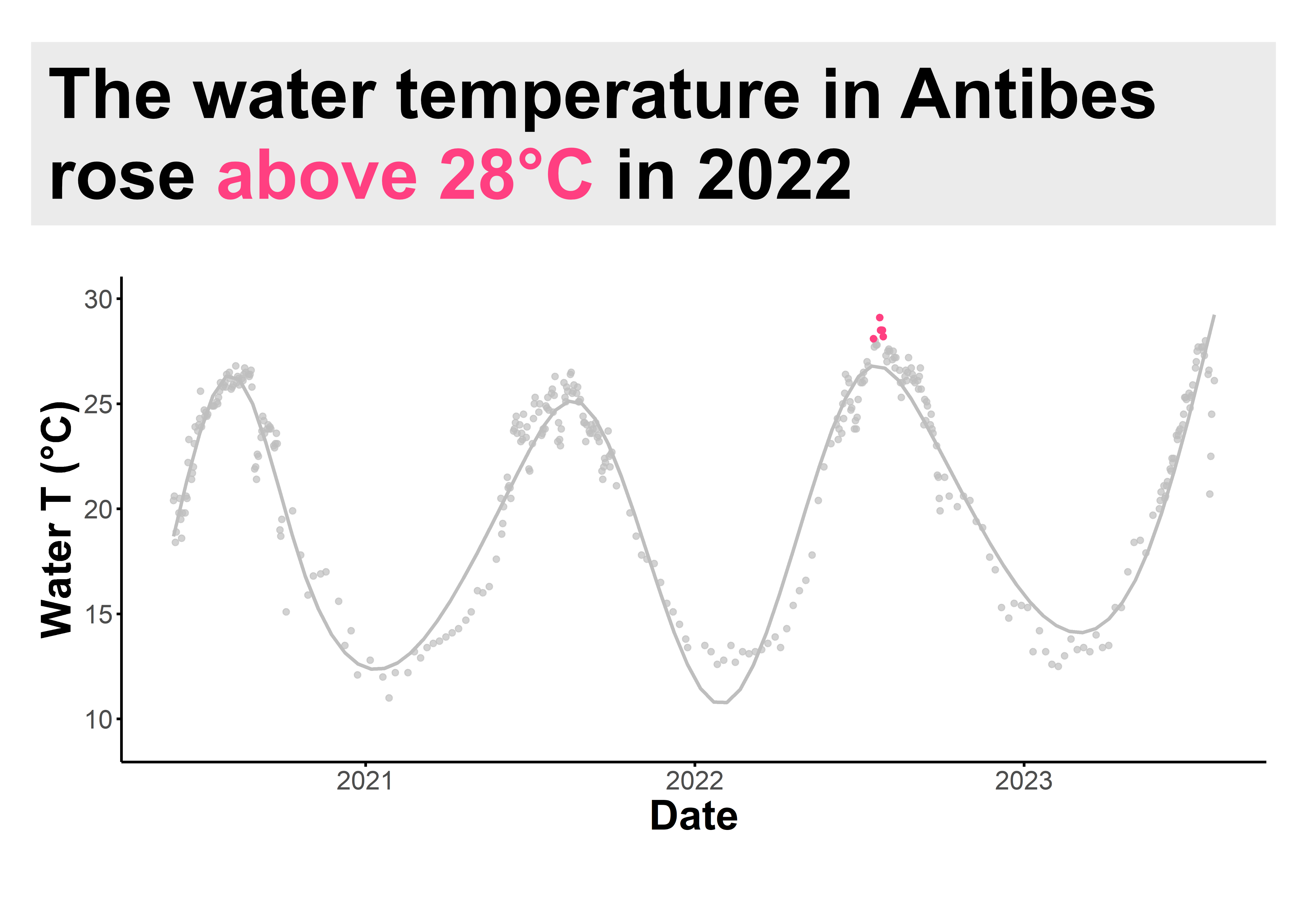
Slide construction should be
a bottom-up process

Starting from a noisy template

Content added first, as a list

Graph added, crowding the slide

A bad title, chosen last

Proposal of a good template

to format your content


Make your title your message = so what?


Sentence

10–15 words

up to 2 lines

Make your title your message = so what?


Left-aligned

Make your title your message = so what?


Good line break

Envision the space with alignment axes and white spaces

Envision the space with alignment axes and white spaces

Maximize the Signal/Noise ratio

Maximize the Signal/Noise ratio
Maximize the Signal/Noise ratio
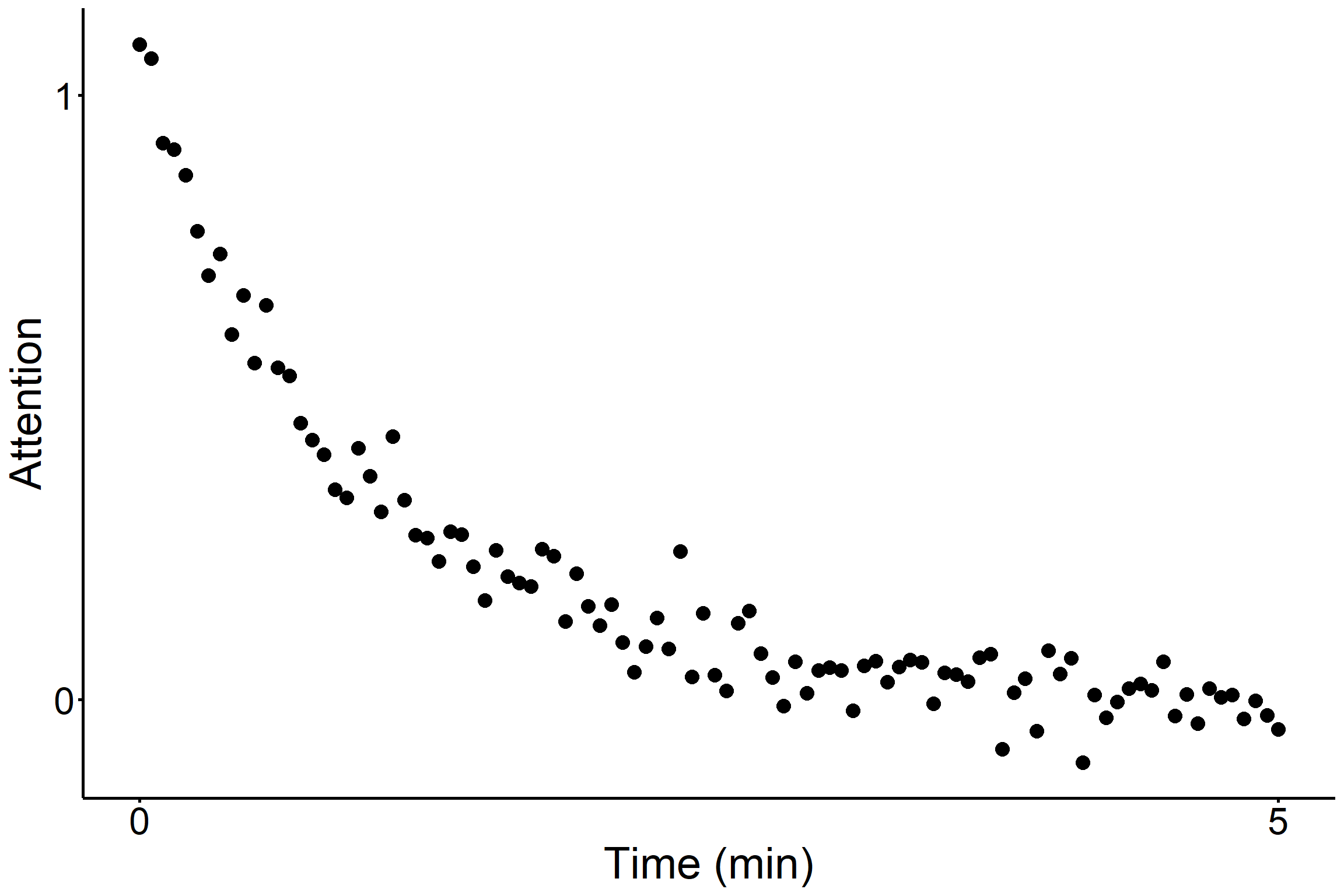
Maximize the Signal/Noise ratio
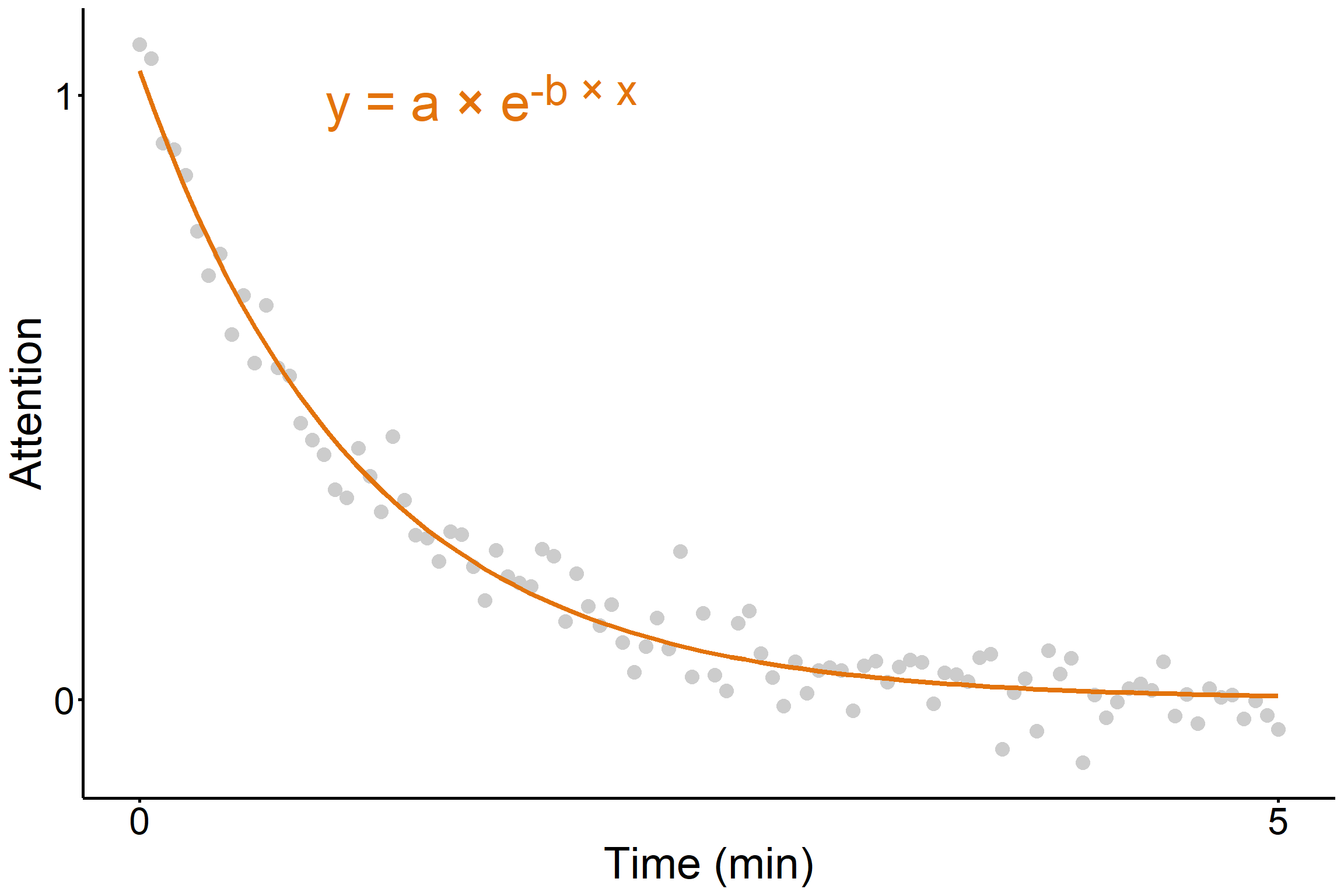
Tie your speech visually to the slide
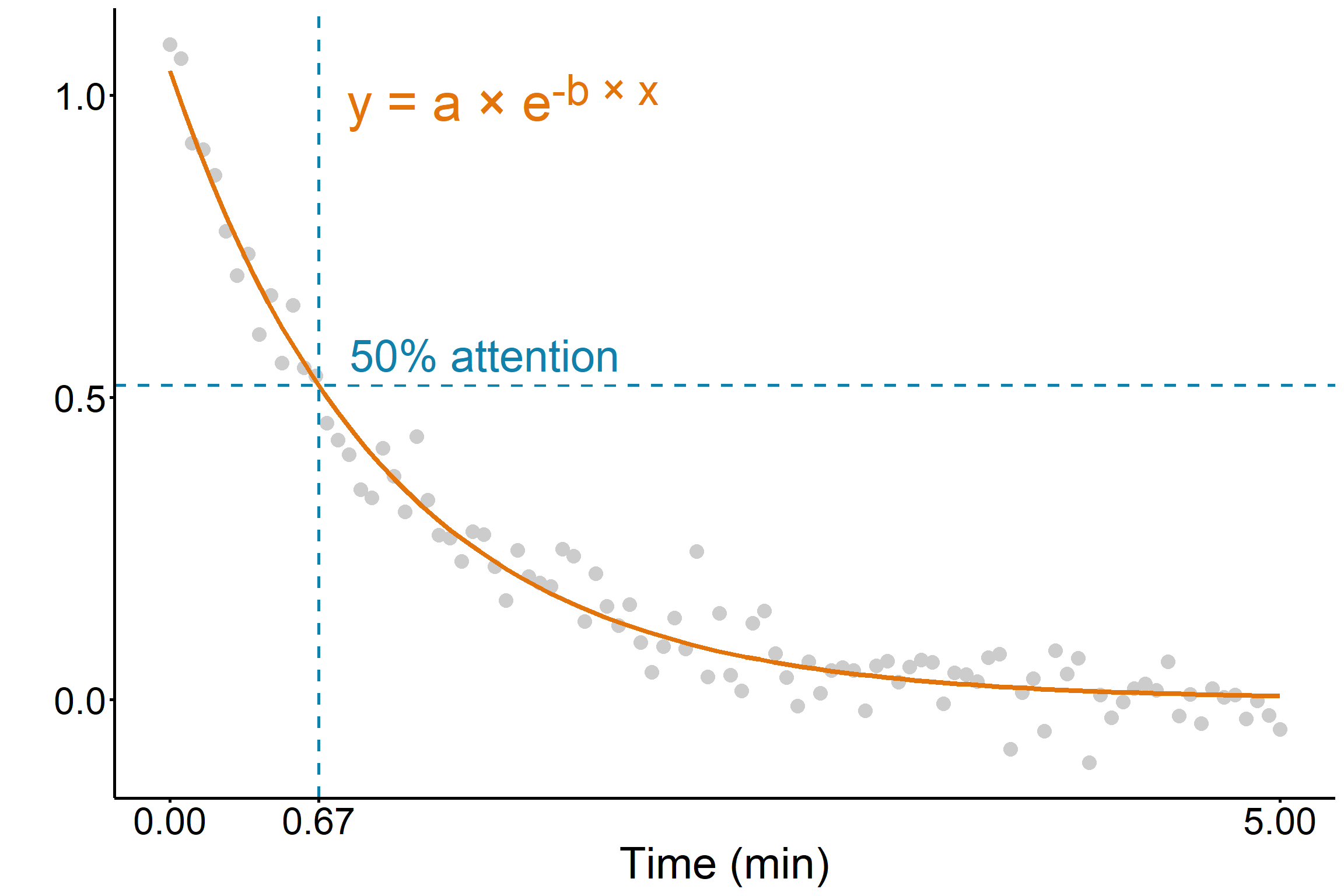
Tie your speech visually to the slide
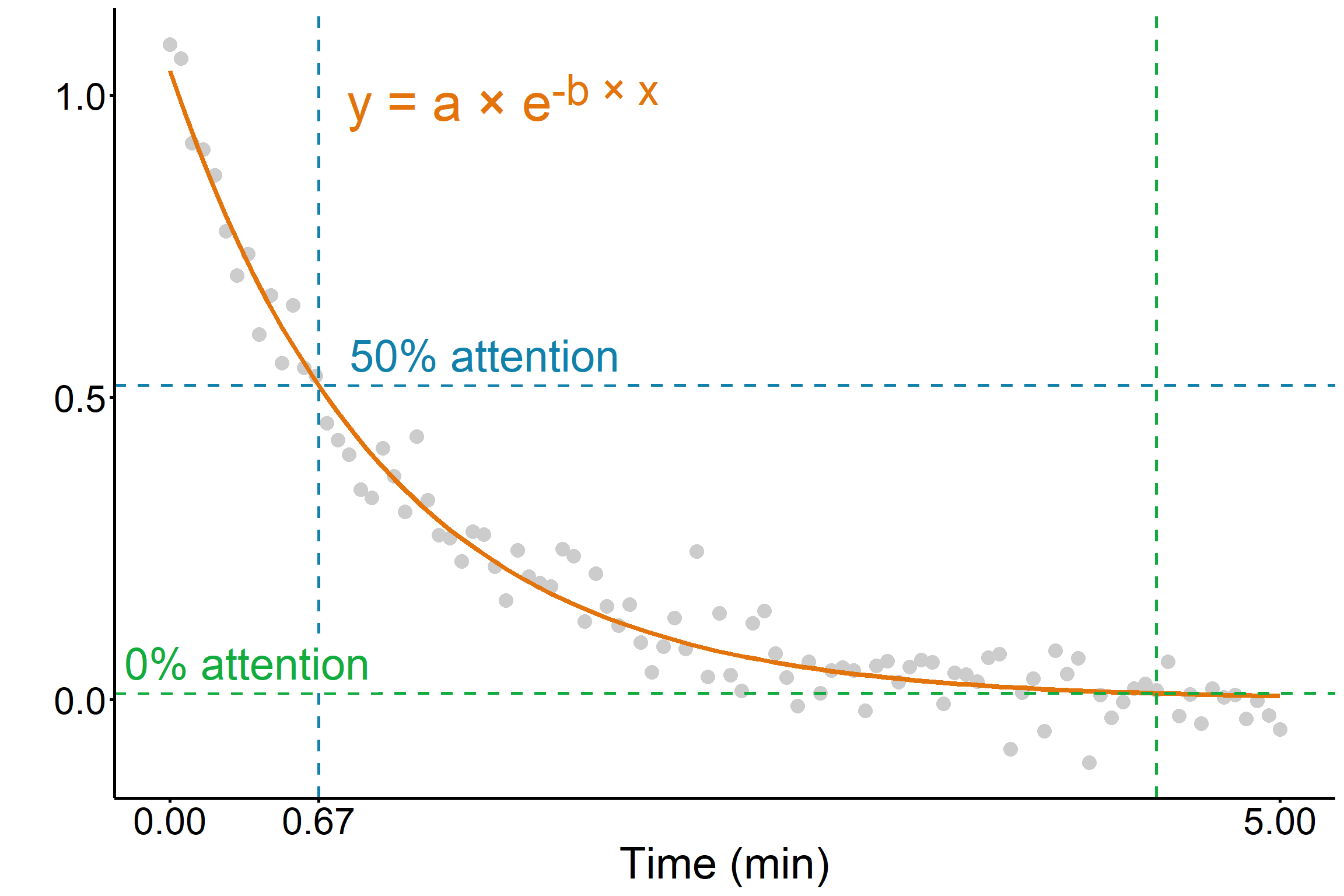
Include your logo in the title slide

Include the logo in your Q&A slide

Theming slides

Legibility, readability, and good taste?

Get inspiration from
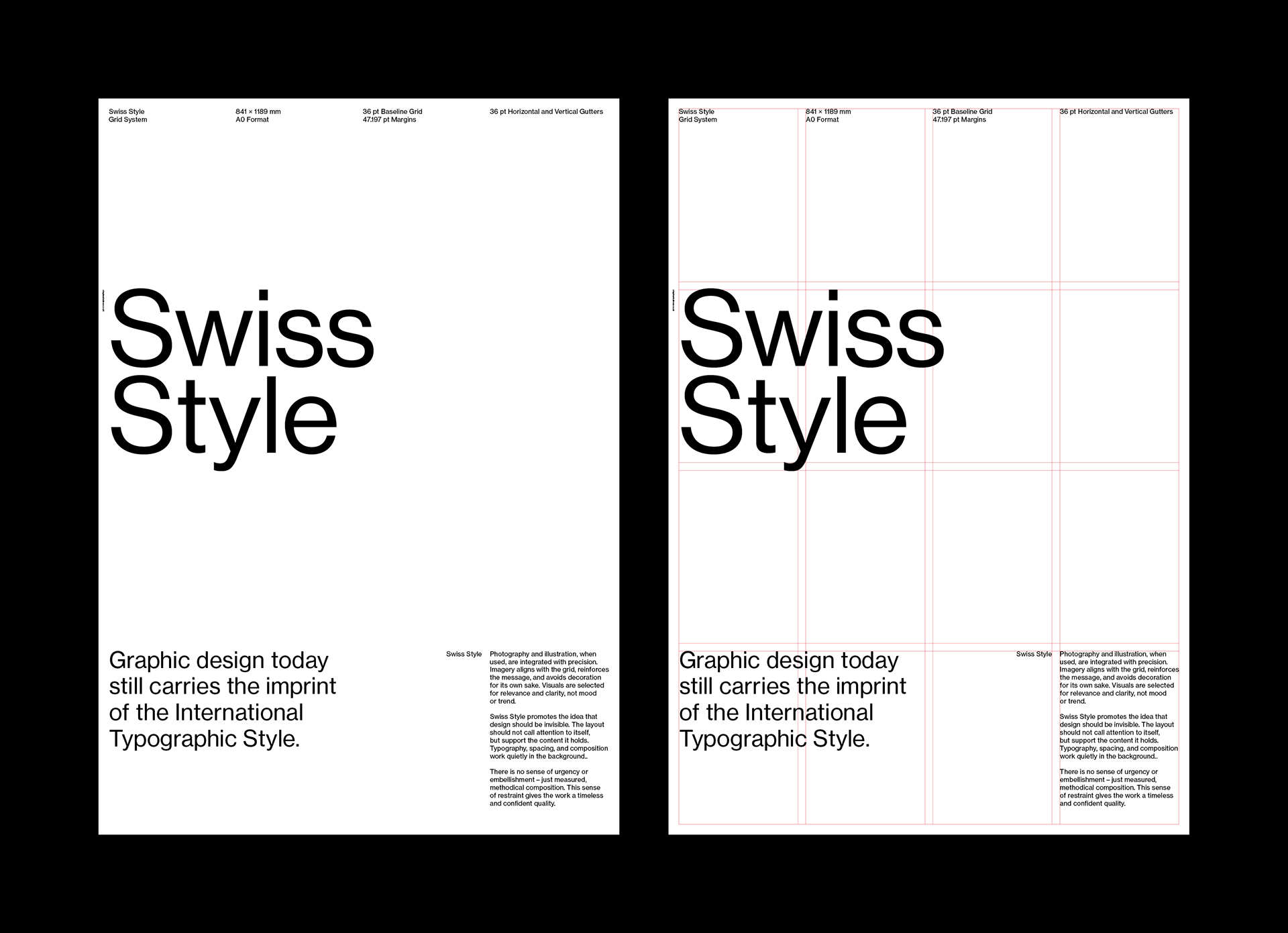
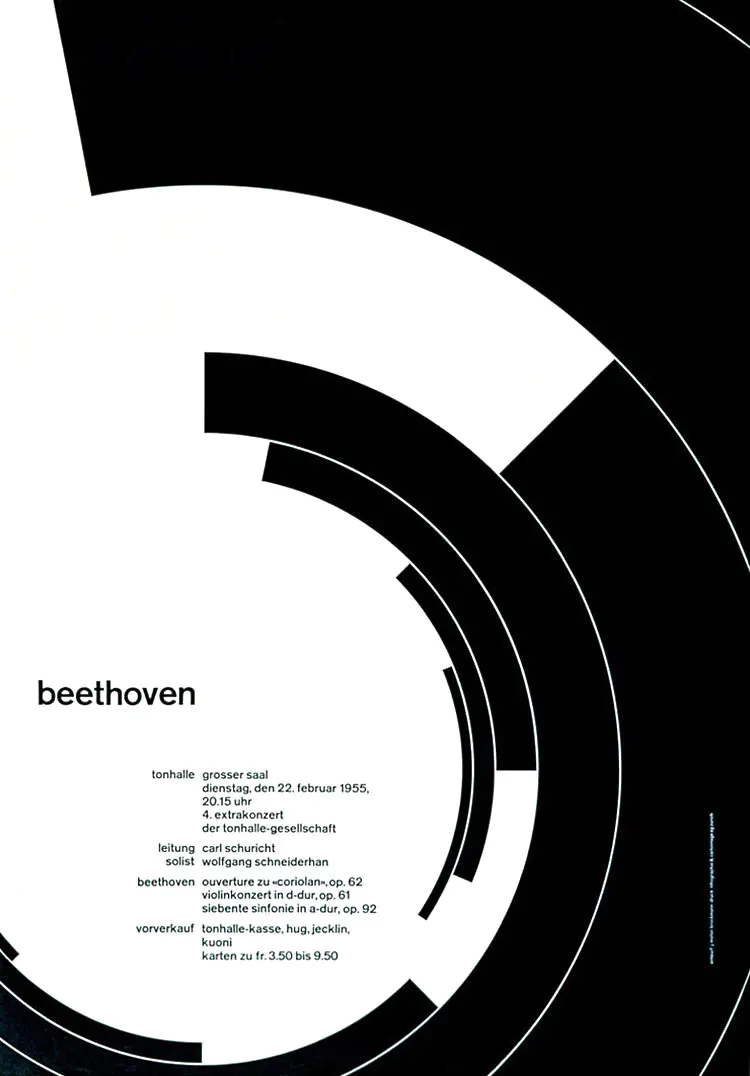
Swiss design

The International Typographic Style
is clear, simple and functional

Key core principles translate into effective slide design
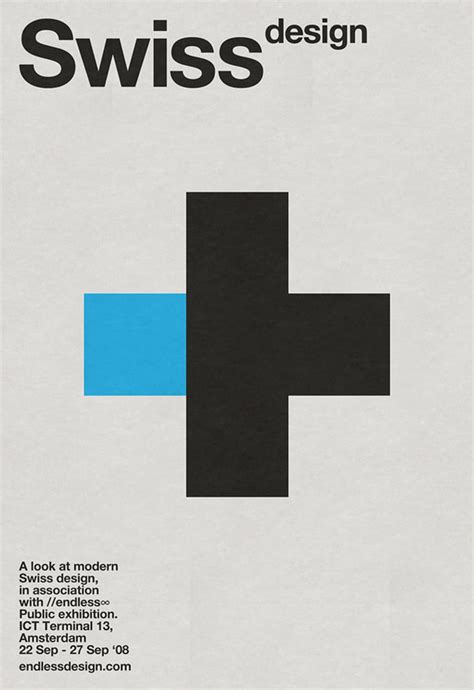
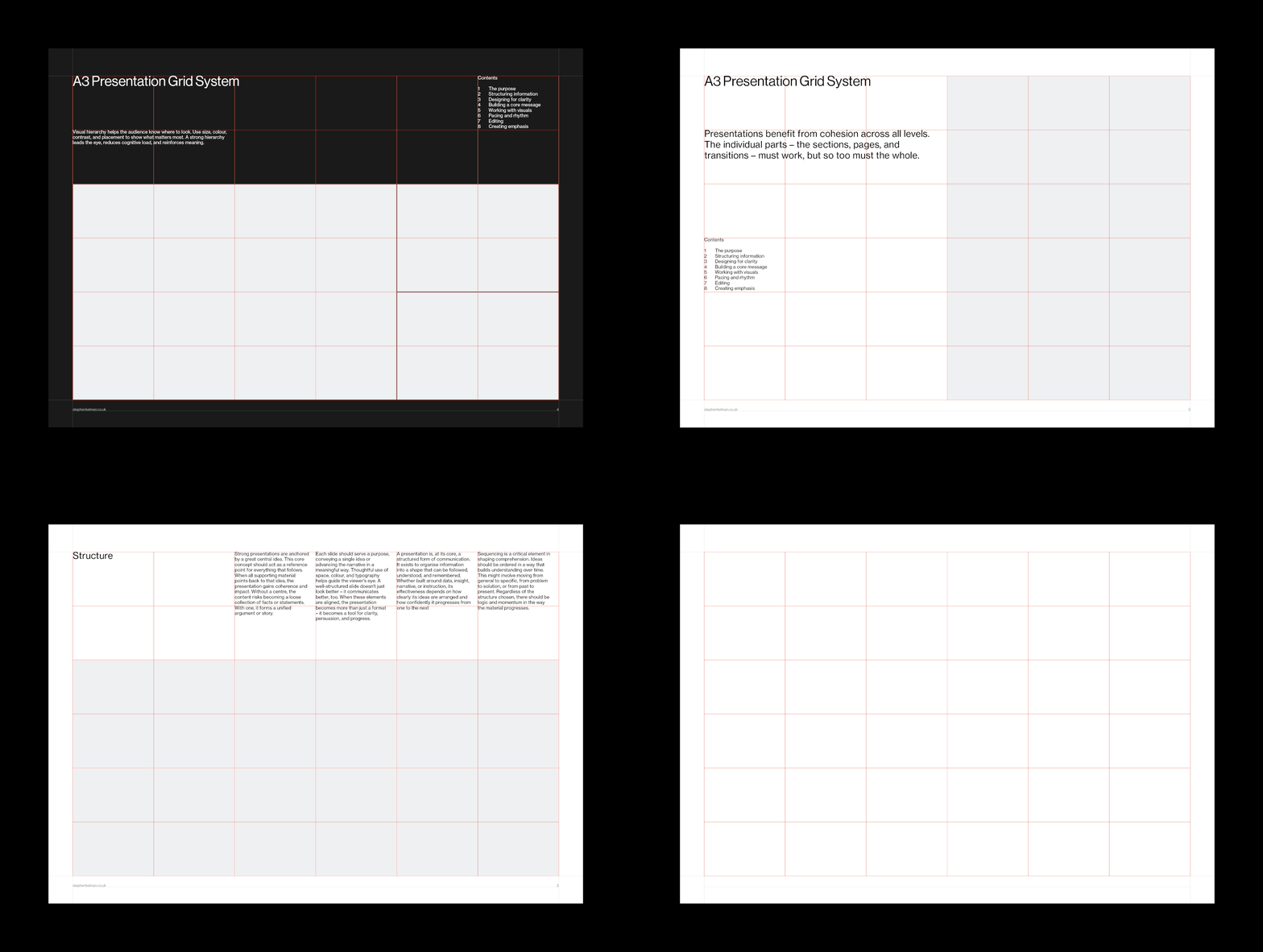
Align, align, align

  • Left-align your text
    • Clean, organized look
    • Avoid centering and justification
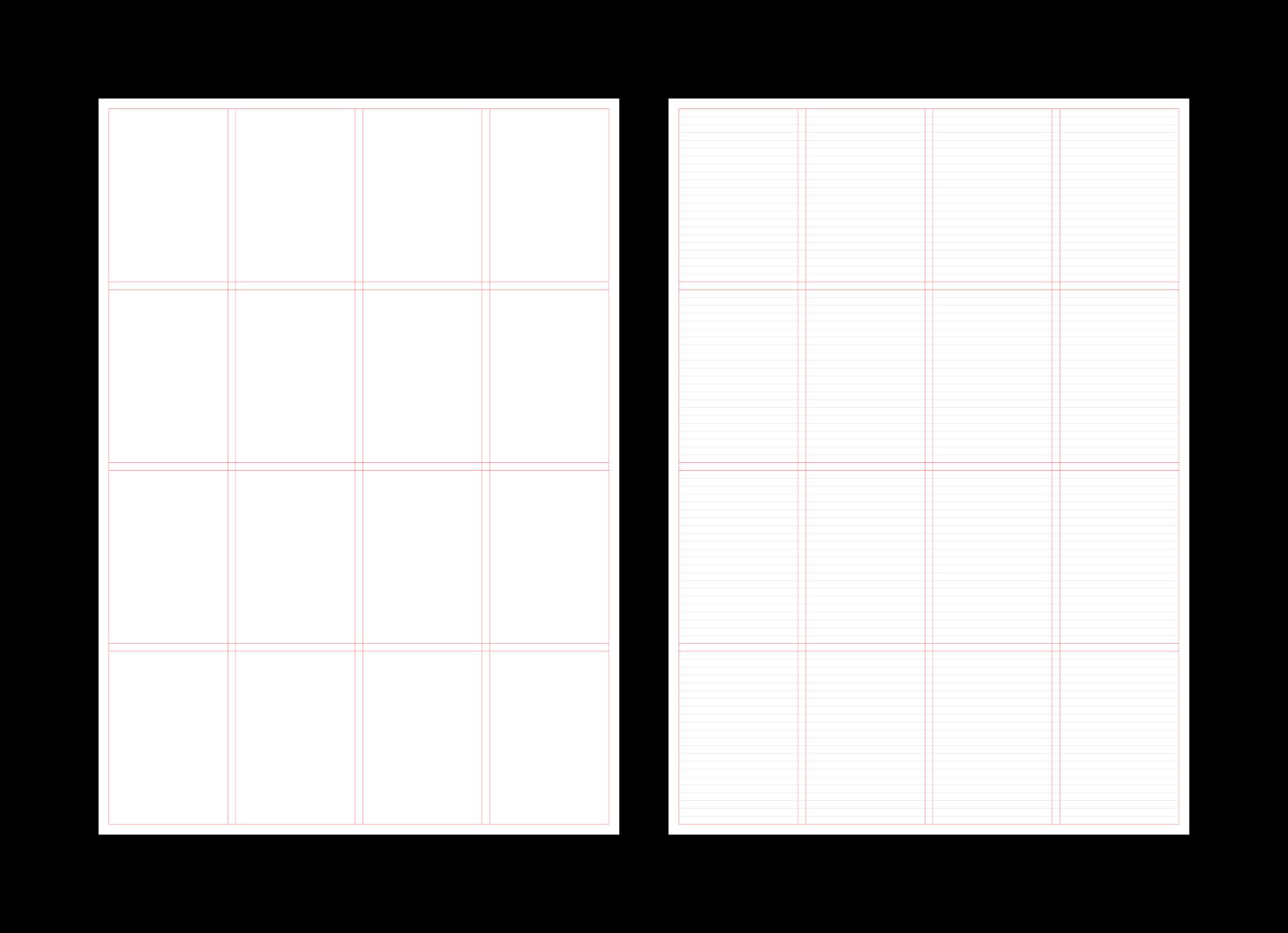
  • Use a modular grid
    • Consistent spacing and alignment
    • Visual harmony, professionalism

Align, align, align
Stephen Kelman

Align, align, align

Stephen Kelman

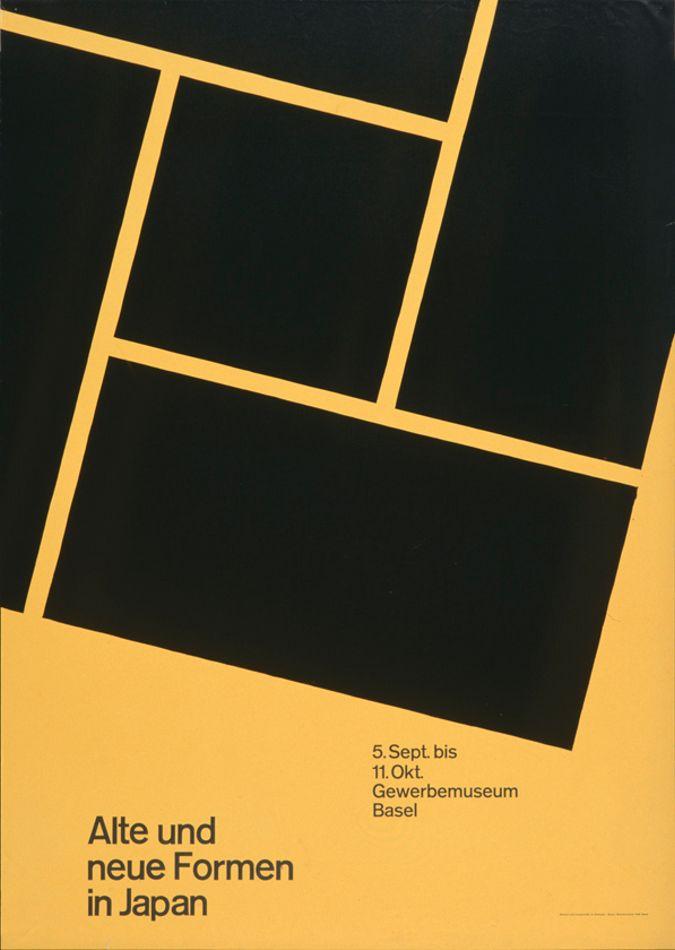
Align, align, align

Stephen Kelman

Use negative space

  • Use white space generously
    • Prevents noise
    • Draws attention to key content
  • Less is more
    • Let the content breathe
    • Improves readability

Use asymmetry

  • Creates dynamic and engaging layouts
    • Keep it grid-aligned!

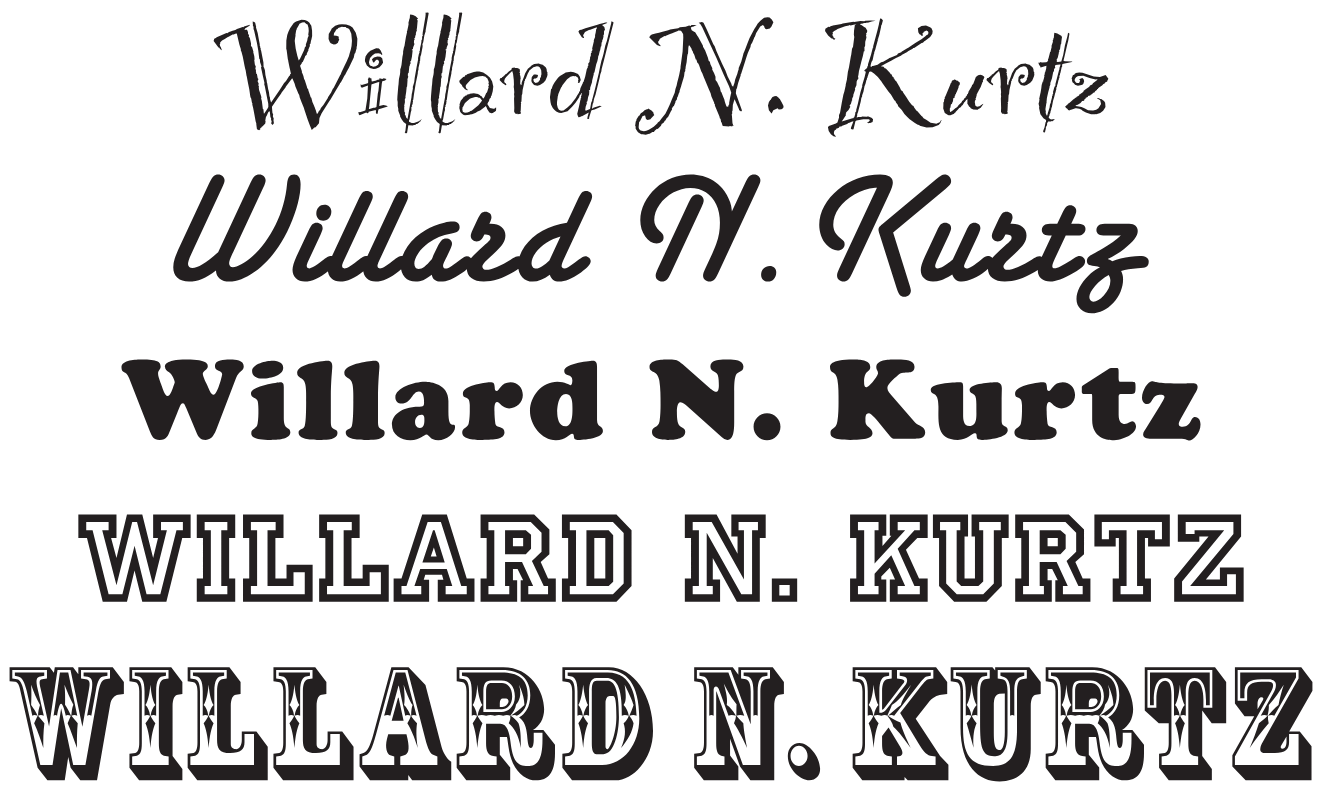
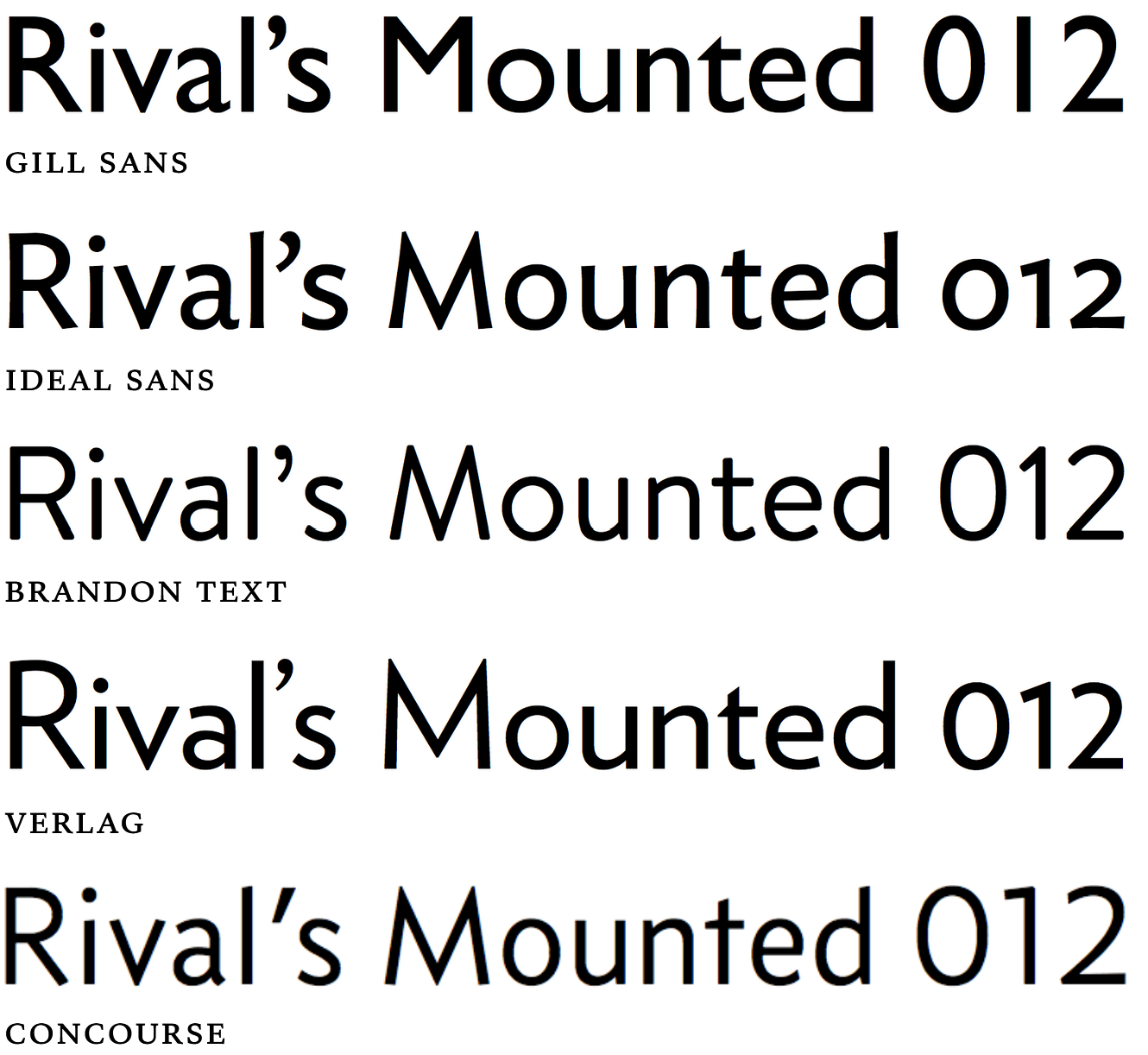
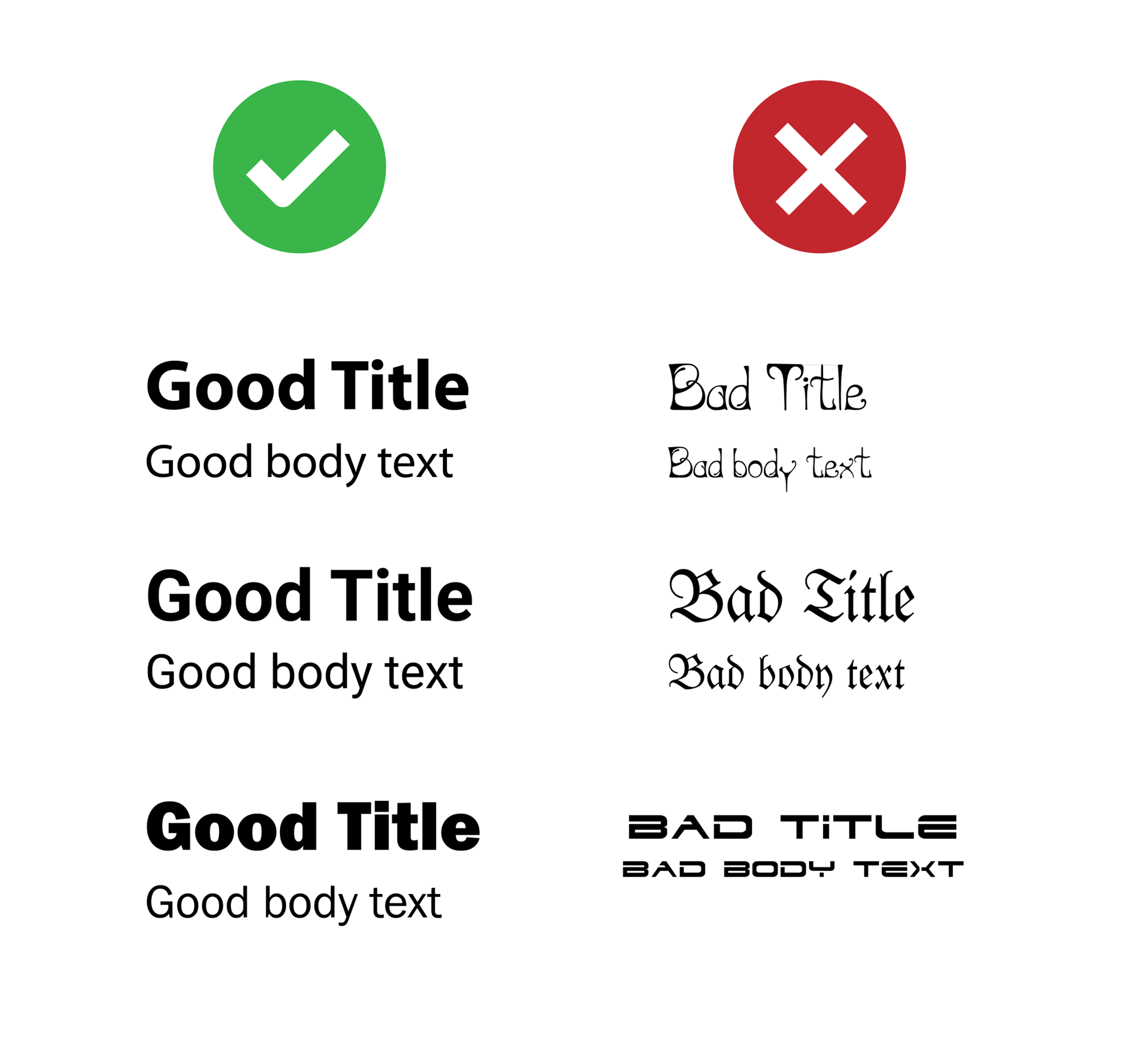
Use sensible typography

  • Distinctive fonts are fine
    • Goofy are not

Use sensible typography

  • Distinctive fonts are fine
    • Goofy are not
  • Use sans-serif fonts
    • Clean, neutral, highly legible

Use sensible typography

  • Distinctive fonts are fine
    • Goofy are not
  • Use sans-serif fonts
    • Clean, neutral, highly legible

Be legible
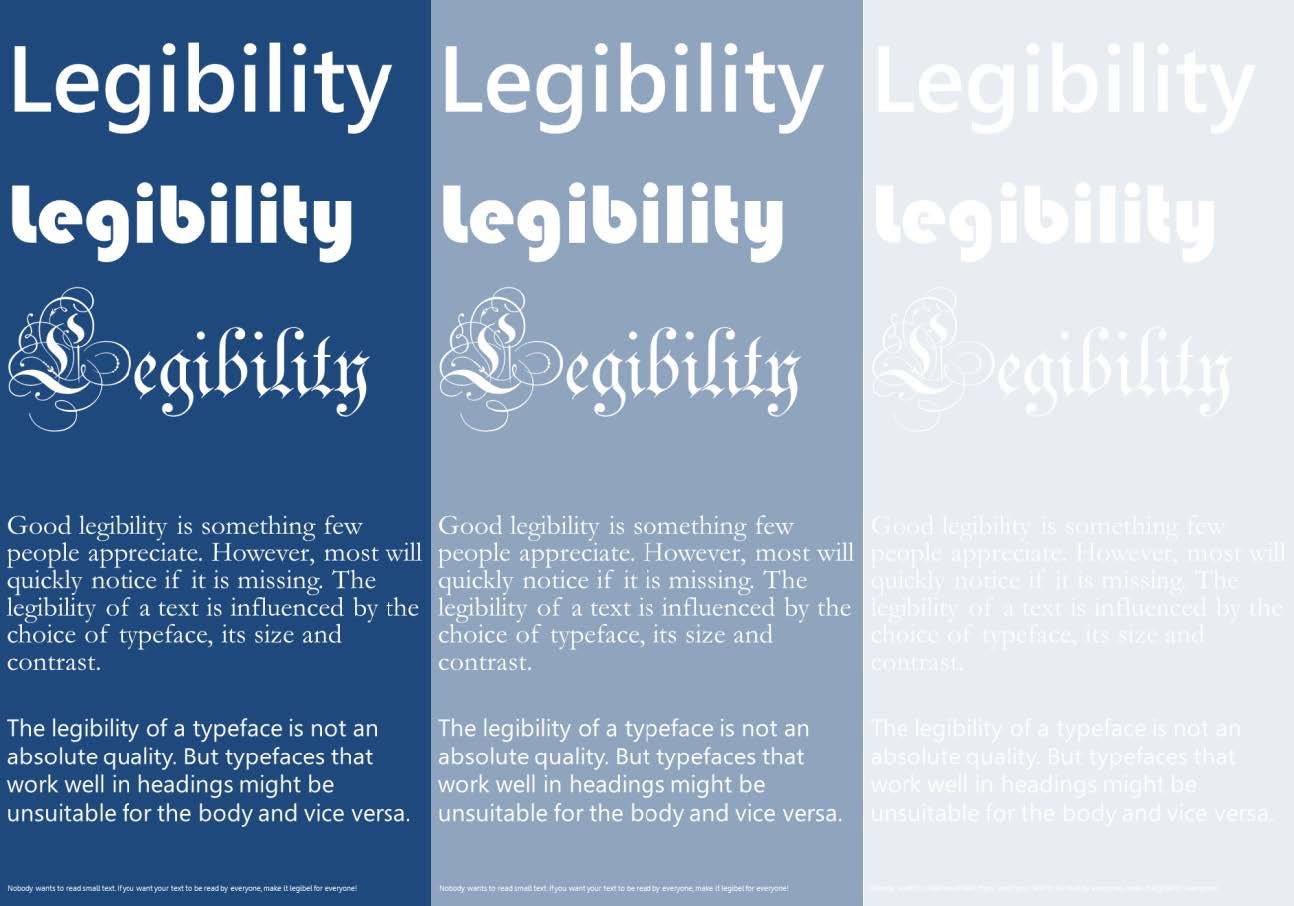
Create hierarchy and emphasis conservatively

  • Use:
    • Bold
    • Color
    • Size
  • Avoid
    • Italics
    • Underlining
    • ALL CAPS

You will read this first

And then this

If you want to know more, you’ll read this part. It takes significant effort because it is a lot of text in a small font size, light weight and tight line spacing. You’ll probably skip if you want to listen to the speaker or because you’re lazy. Or maybe you’ve stopped paying attention to the speaker a long time ago and you’d rather read this. Not sure it’s a very valuable use of your time, but it is your time after all, so fair enough. By the way, did you notice this block of text is justified? Not the best idea in the world…

You’ll probably read this before the paragraph

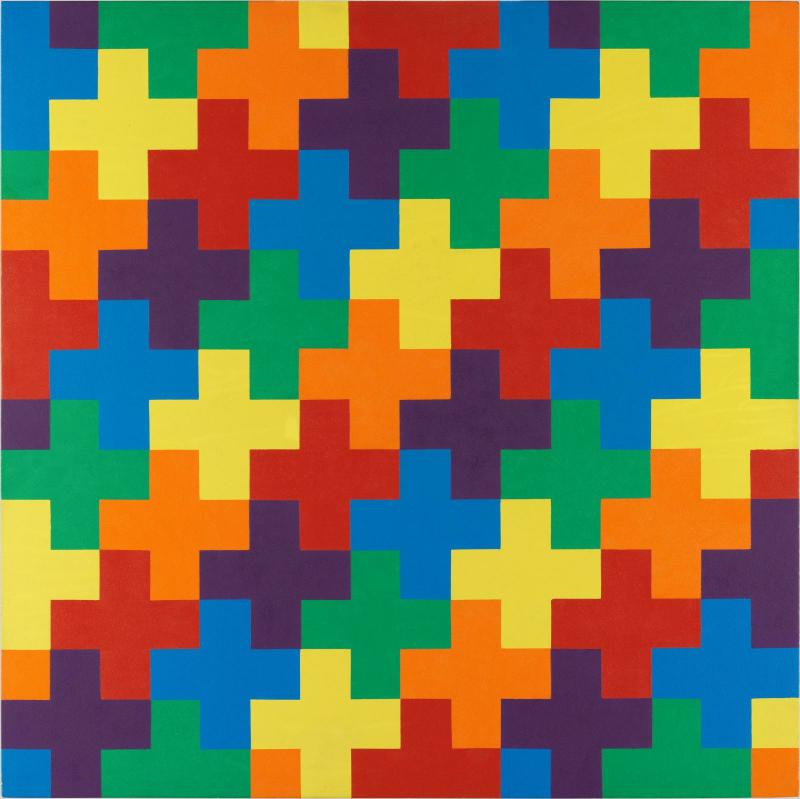
Use colors as if you’d need to pay for it

  • Avoid gradients or overly bright colors
    • Distracting, hard to read

Violet-bleu-vert-jaune-orange-rouge, 1953
François Morellet, Centre Pompidou

Use colors as if you’d need to pay for it

  • Avoid gradients or overly bright colors
    • Distracting, hard to read
  • Minimalist color palettes
    • Neutral base (black, white, gray)
    • 1 or 2 accent colors for emphasis

Use contrast only to highlight
key information
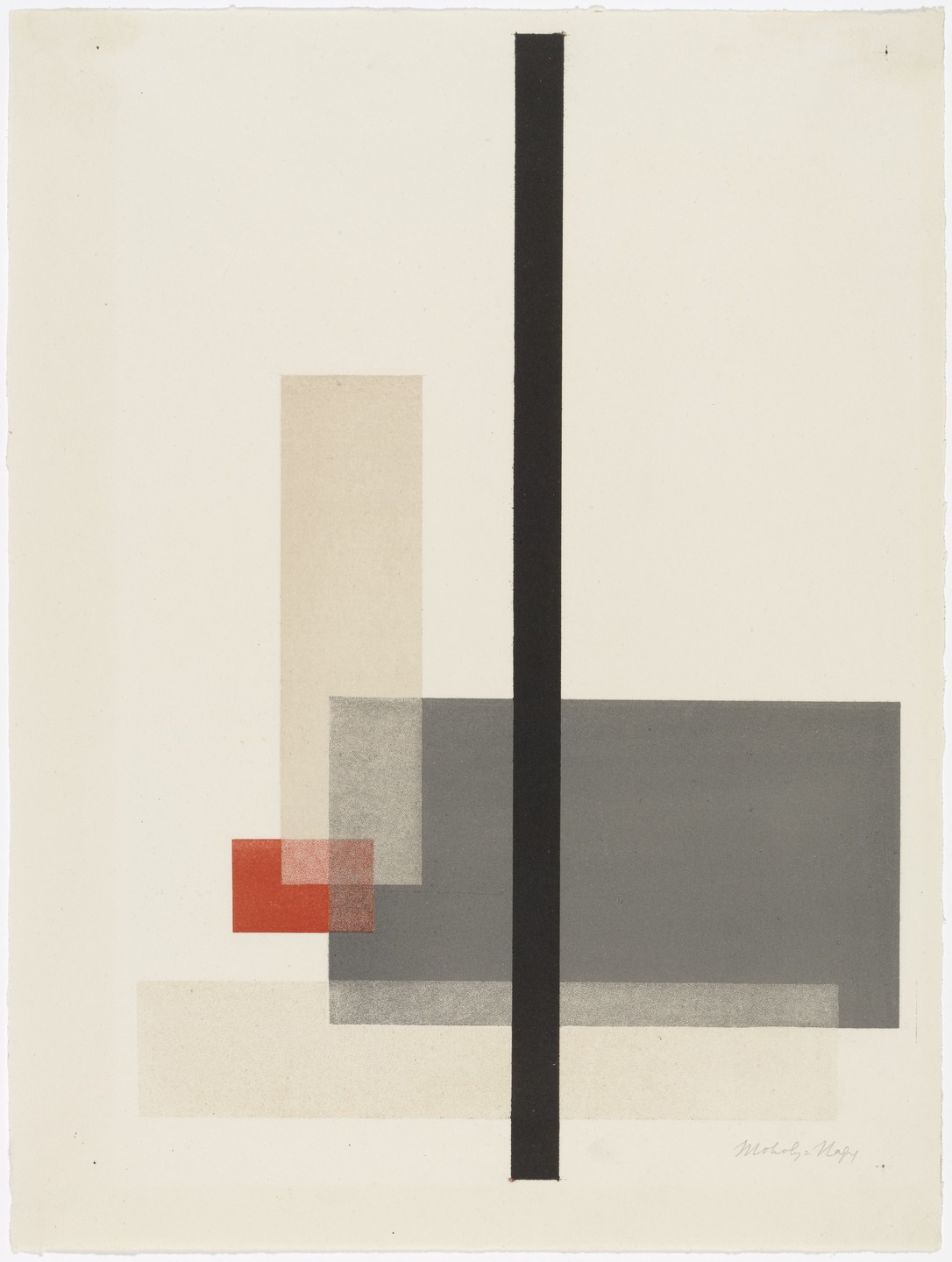
Sans titre, 1923
László Moholy-Nagy, Centre Pompidou

Contrast is king

Be clear and objective

  • No unnecessary decoration
    • Every element should serve a purpose
  • Use simple graphics to convey ideas visually
    • Avoid complex charts, 3D effects, excessive animations
    • No cliparts, no bad quality images
  • Be consistent with font, color scheme and layout
    • Build cohesion and professionalism

Recommendations on colors

No grayscale compatibility may cause issues
for color blind people.
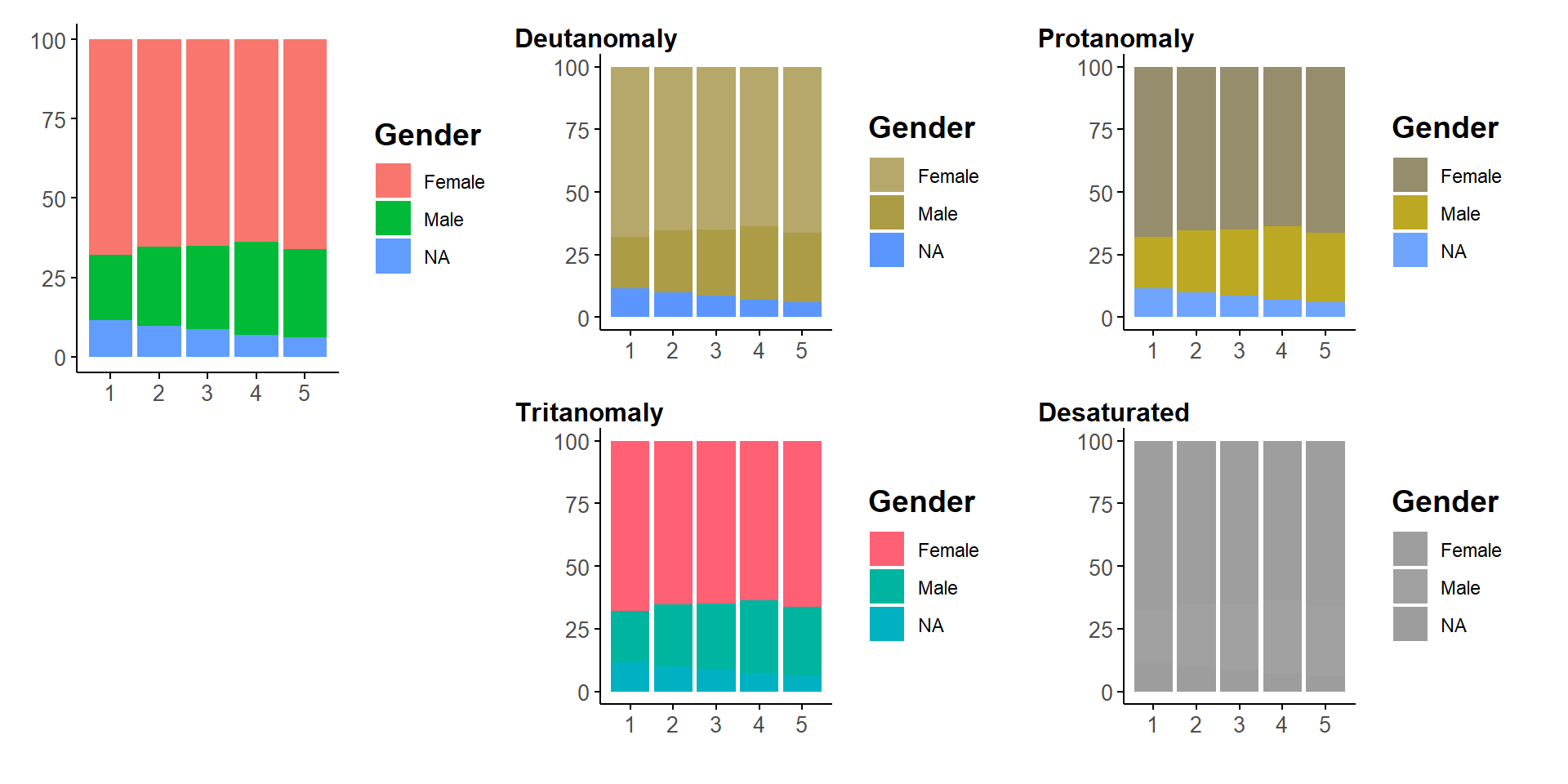
Culturally ingrained choices are often poor
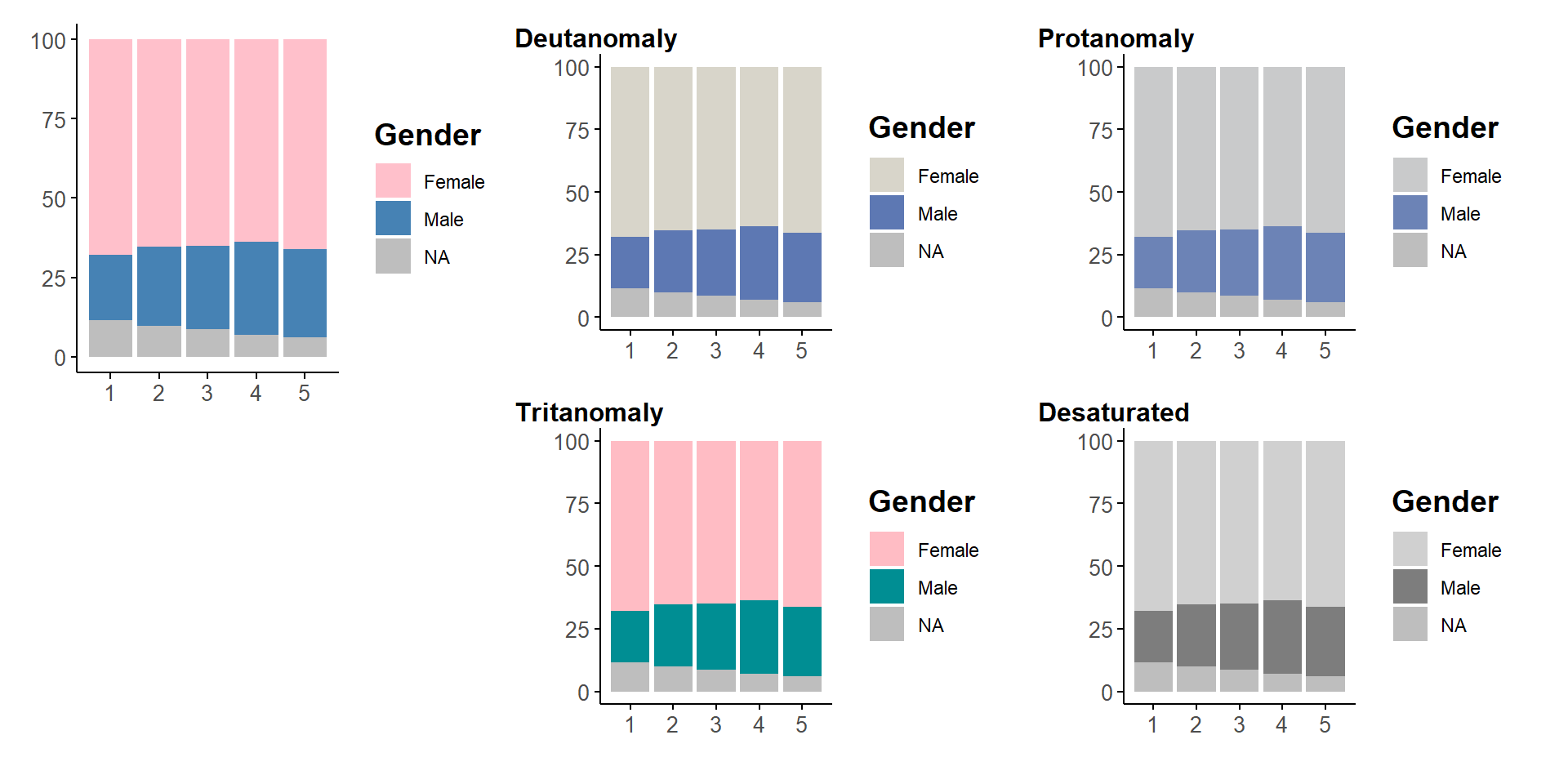
Okabe Ito is good choice for colorblindness
but not grayscale
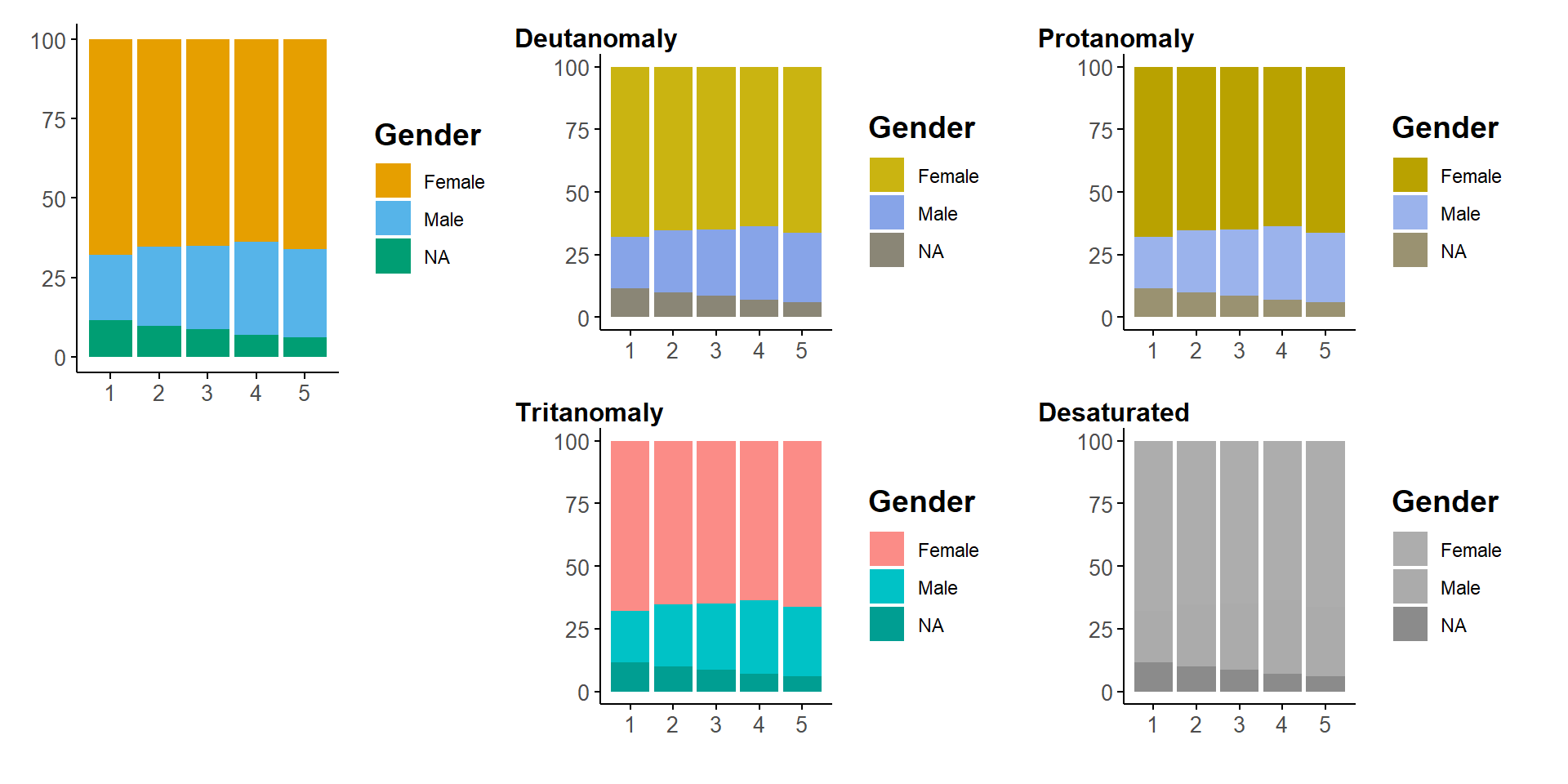
Viridis is always good choices
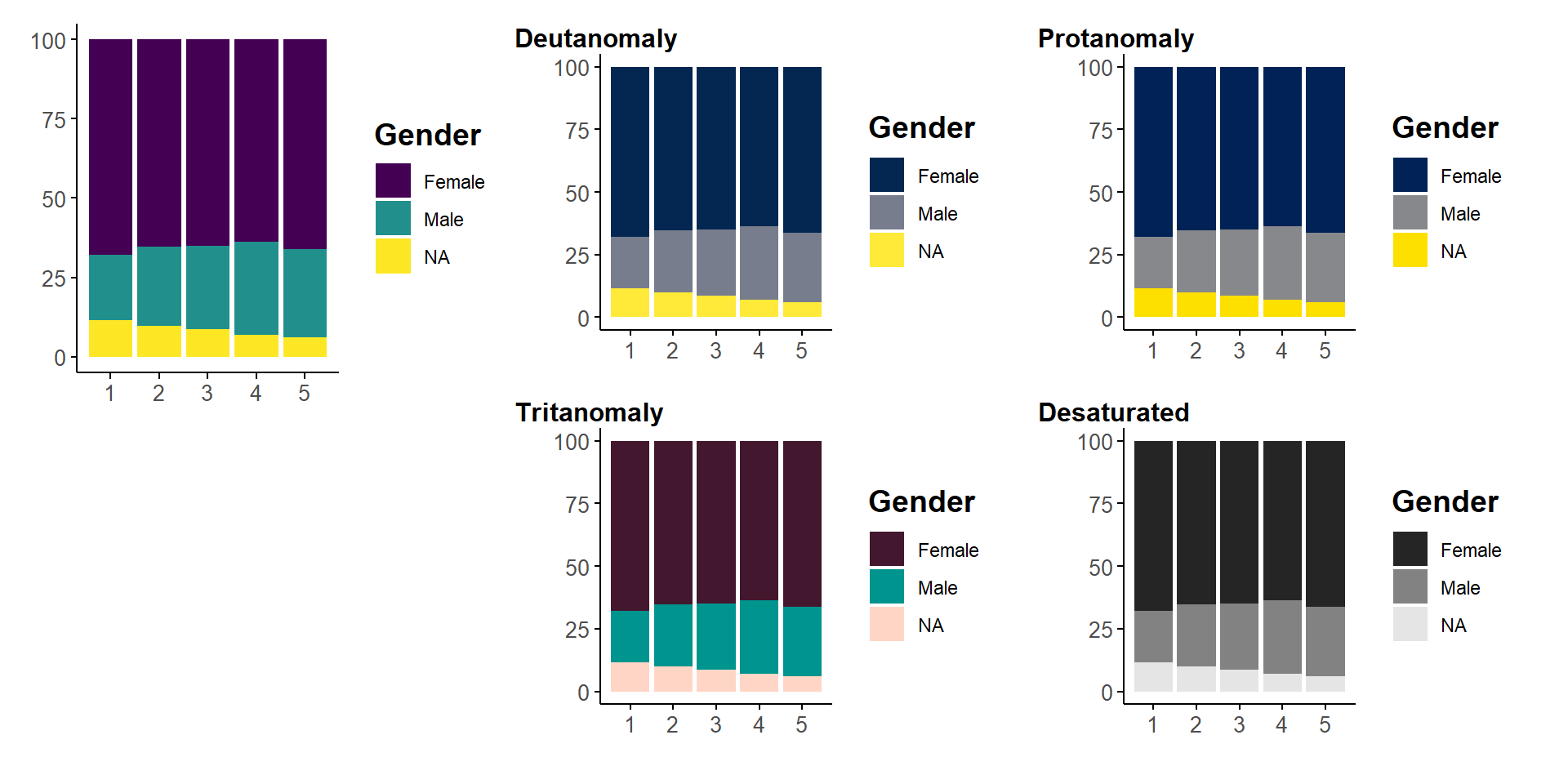
Cividis is an example of alternative
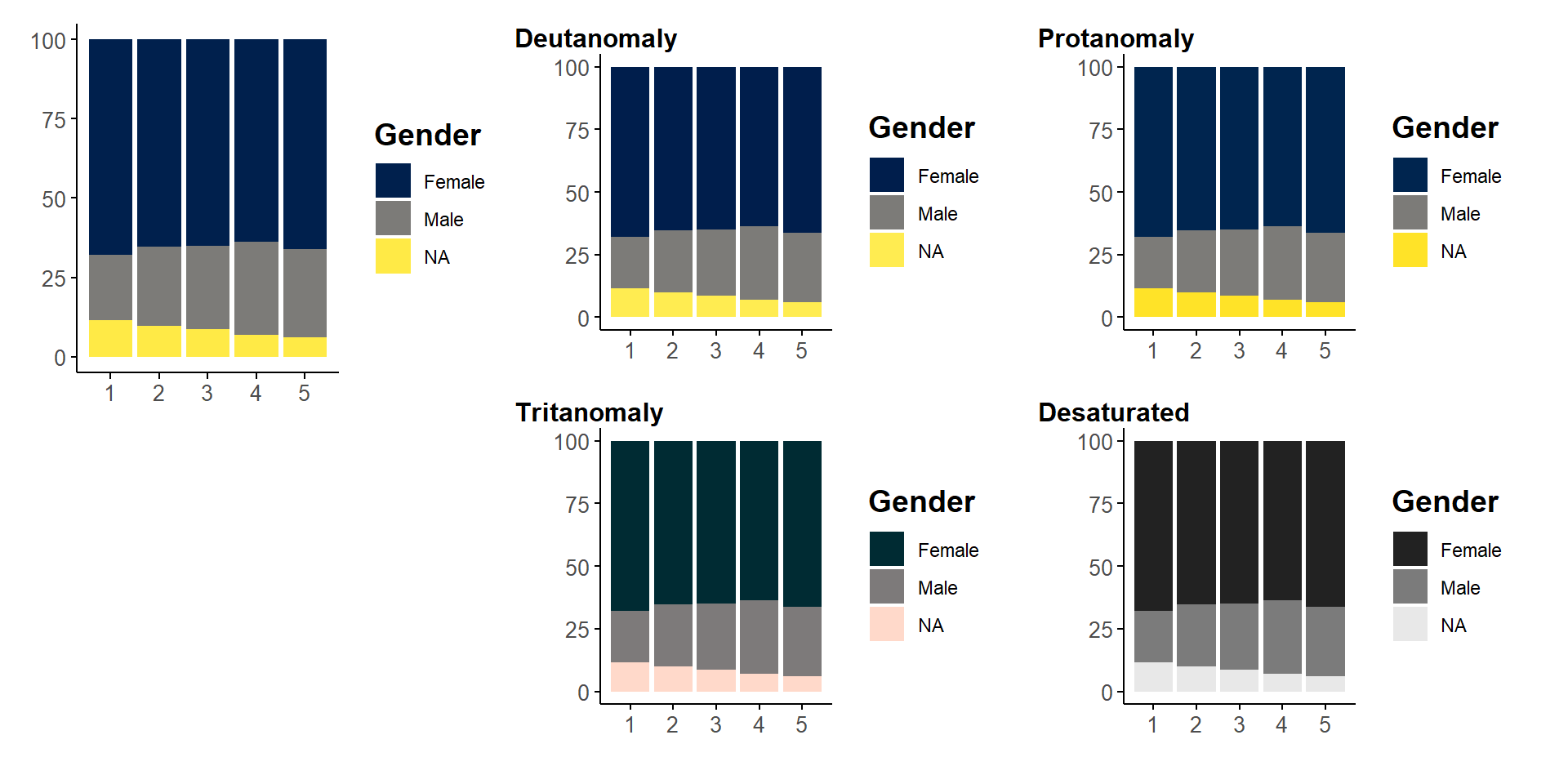
Rainbows are always bad choices
because they are not perceptually uniform
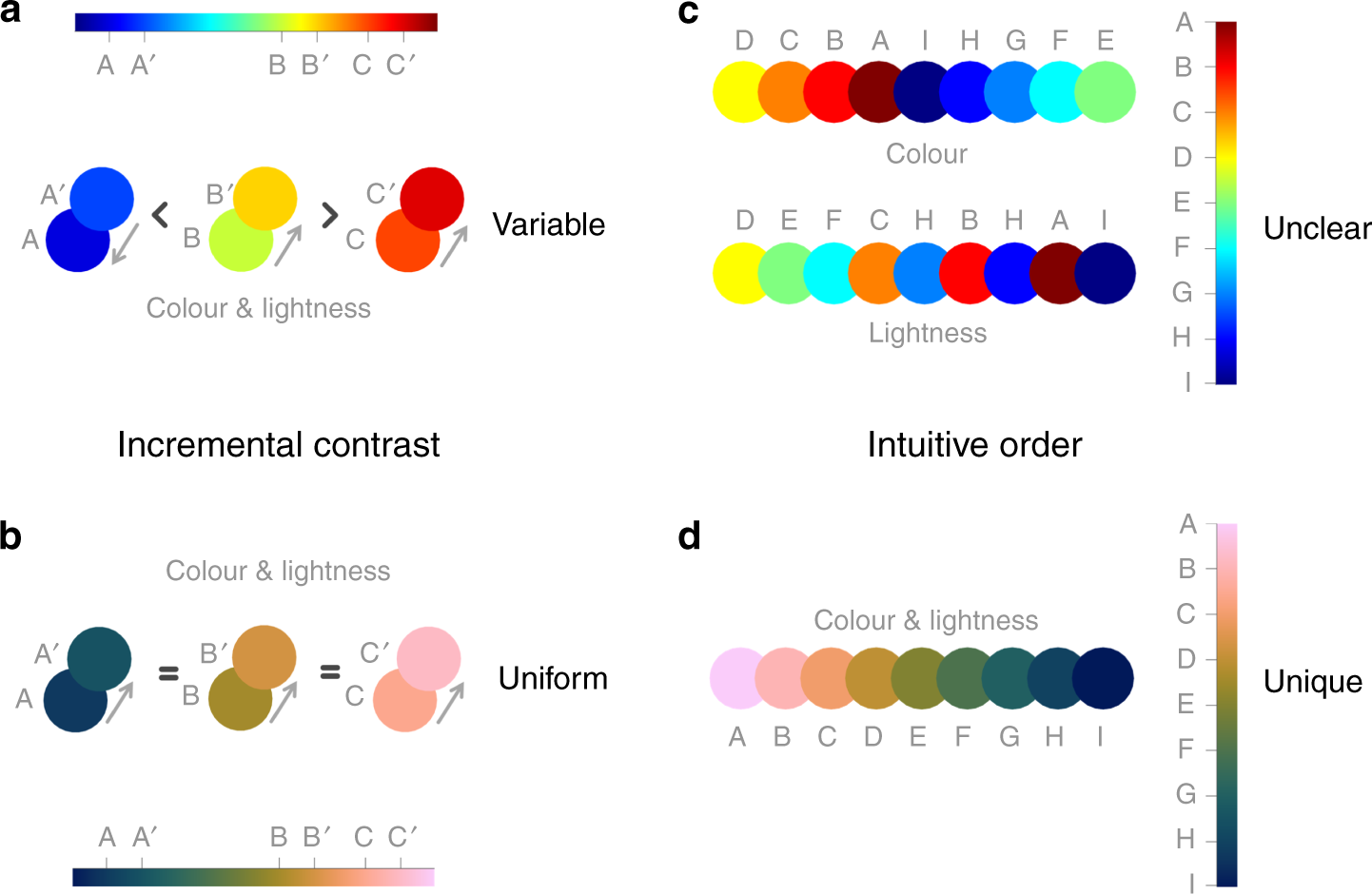
Nature Communications volume 11, Article number: 5444

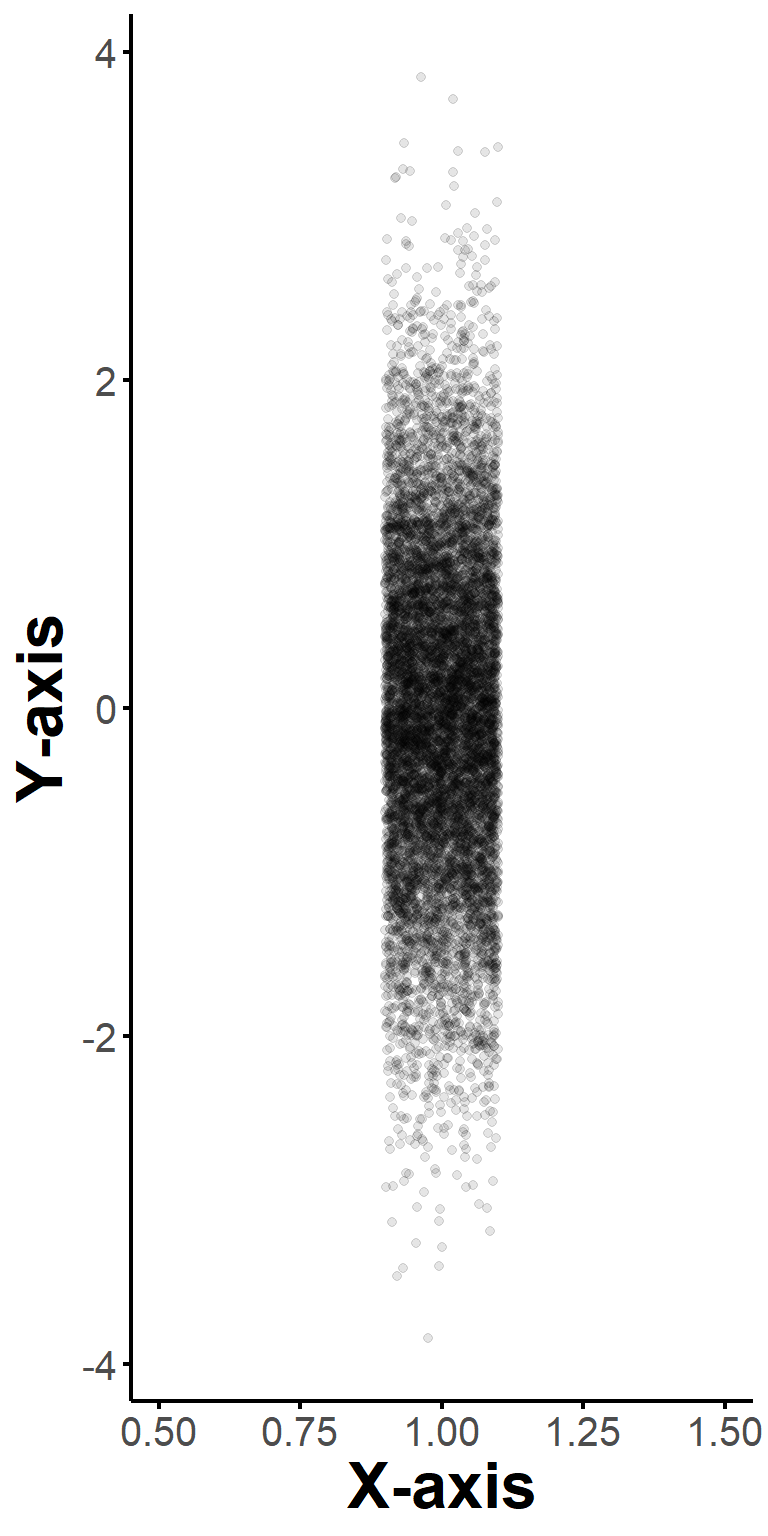
Use transparency

  • Useful for density, background
  • Retain color information without overwhelming figure

Use shades of the same color
to create a harmonious palette

red
#fff8f6
#ffddd8
#ff4647
#e0002b
#830014
#530003
orange
#fff8f5
#ffded1
#fd4d00
#cd3c00
#752100
#401600
cinnamon
#fff8f3
#ffdfc6
#d57300
#ac5c00
#633300
#371d00
amber
#fff8ef
#ffe0b2
#b98300
#926700
#523800
#302100
yellow
#fff9e5
#ffe53e
#9c8b00
#7d6f00
#463d00
#292300
lime
#f7ffac
#d5f200
#819300
#677600
#394100
#222600
chartreuse
#e5ffc3
#98fb00
#5c9b00
#497c00
#264500
#182600
green
#e0ffd9
#72ff6c
#00a21f
#008217
#004908
#062800
emerald
#dcffe6
#5dffa2
#00a05a
#008147
#004825
#002812
aquamarine
#daffef
#42ffc6
#009f78
#007f5f
#004734
#00281b
teal
#d7fff7
#00ffe4
#009e8c
#007c6e
#00443c
#002722
cyan
#c4fffe
#00fafb
#00999a
#007a7b
#004344
#002525
powder
#dafaff
#8df0ff
#0098a9
#007987
#004048
#002227
sky
#e3f7ff
#aee9ff
#0094b4
#007590
#00404f
#001f28
cerulean
#e8f6ff
#b9e3ff
#0092c5
#00749d
#003c54
#001d2a
azure
#e8f2ff
#c6e0ff
#008fdb
#0071af
#003b5e
#001c30
blue
#f0f4ff
#d4e0ff
#0089fc
#006dca
#00386d
#001a39
indigo
#f3f3ff
#deddff
#657eff
#0061fc
#00328a
#001649
violet
#f7f1ff
#e8daff
#9b70ff
#794aff
#2d0fbf
#0b0074
purple
#fdf4ff
#f7d9ff
#d150ff
#b01fe3
#660087
#3a004f
magenta
#fff3fc
#ffd7f6
#f911e0
#ca00b6
#740068
#44003c
pink
#fff7fb
#ffdcec
#ff2fb2
#d2008f
#790051
#4b0030
rose
#fff7f9
#ffdce5
#ff3b8d
#db0072
#800040
#4c0023
raspberry
#fff8f8
#ffdddf
#ff426c
#de0051
#82002c
#510018

White, snowy Christmas:
The truth behind
a misleading cliché

William Audureau and Léa Prati, Le Monde, December 23, 2025

Chances of seeing snow in France on December 25
have never been lower

  • Average French person < 33 y.o. only experienced 1 white Christmas
  • Not just a consequence of global warming
  • Deceptive cultural construction

Average 32 y.o. French person
only experienced 1 white Christmas
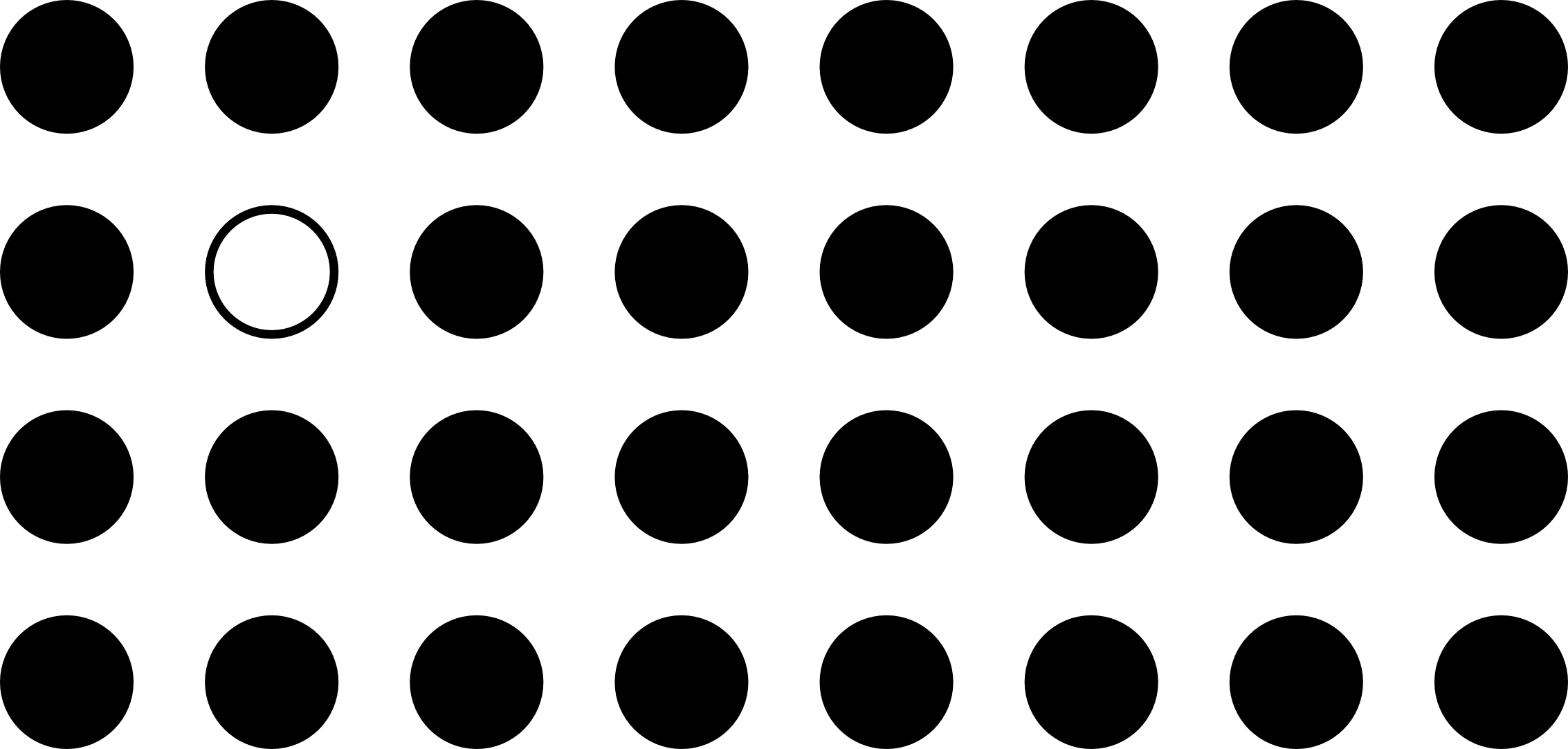
A deceptive cultural construction

A deceptive cultural construction
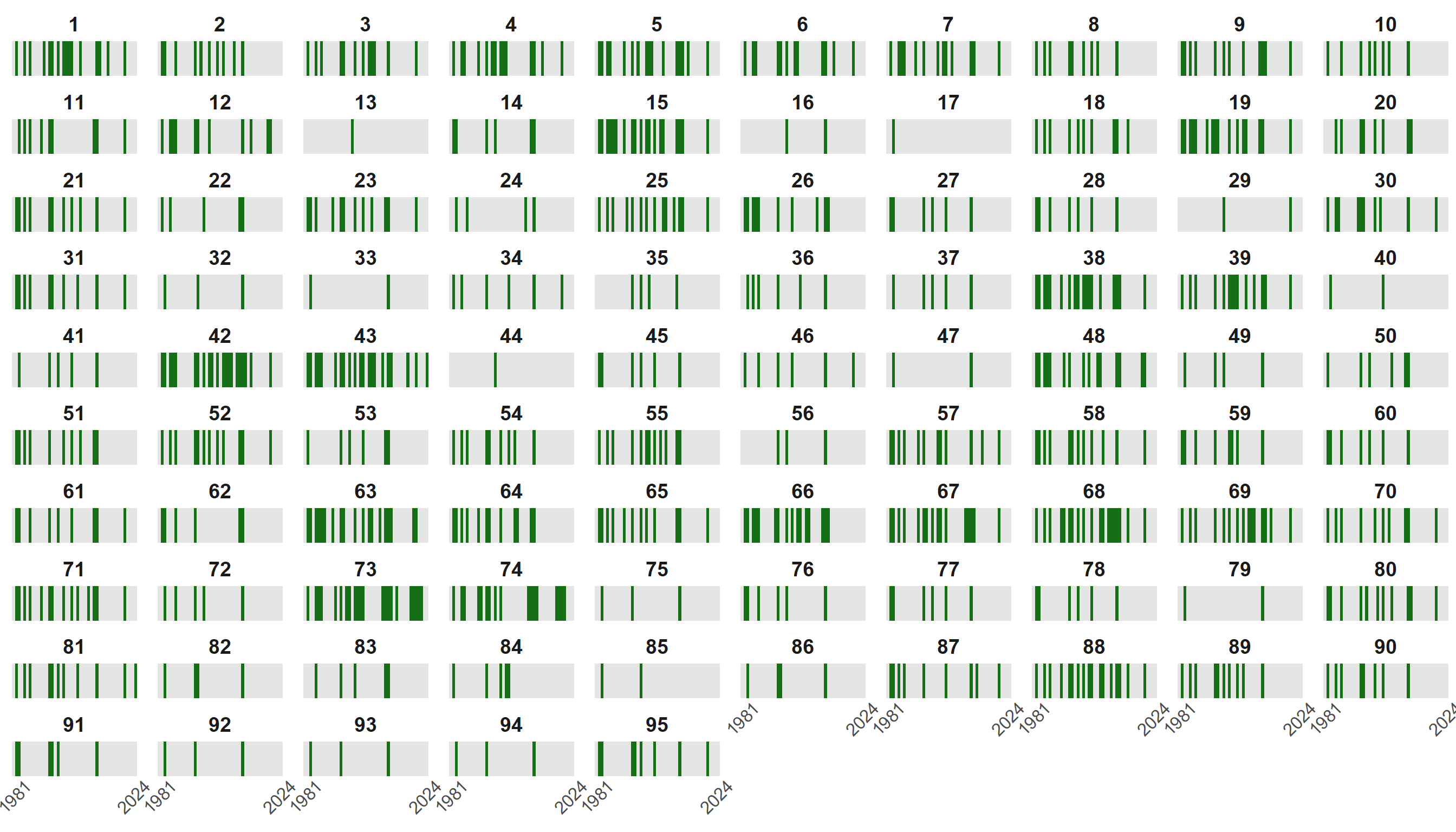
Snow in medevial times?

  • In 12th century, the Roman de Renart mentioned “nois” (“snow” in Old French) seen “shortly before Christmas”
  • Snow not yet associated with the holiday.

Snow is not associated with Christmas
before the 13th century

St. Albans Psalter, 12th century, WIKIMEDIA

Major climate upheaval

  • Colossal volcanic eruption in Indonesia around 1257
  • Europe entered the “Little Ice Age”
    • Six-century period of colder temperatures

F. Lavigne, J. Degeai, J. Komorowski, S. Guillet, V. Robert, P. Lahitte, C. Oppenheimer, M. Stoffel, C.M. Vidal, , I. Pratomo, P. Wassmer, I. Hajdas, D.S. Hadmoko, & E. de Belizal, Source of the great A.D. 1257 mystery eruption unveiled, Samalas volcano, Rinjani Volcanic Complex, Indonesia, Proc. Natl. Acad. Sci. U.S.A. 110 (42) 16742-16747, https://doi.org/10.1073/pnas.1307520110 (2013).

A volcanic eruption triggered an ice age in Europe
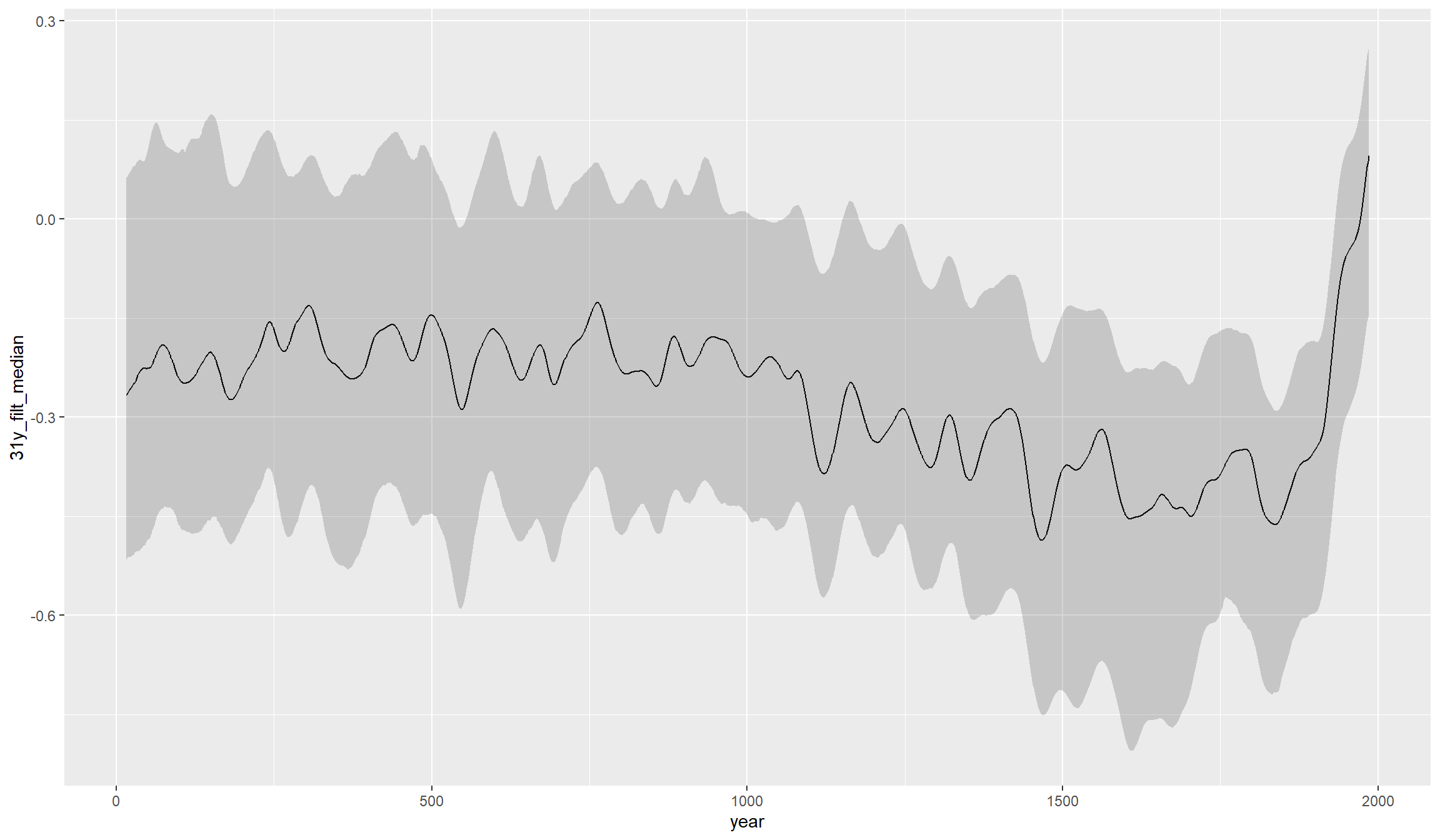
Remove unnecessary elements and add whitespace
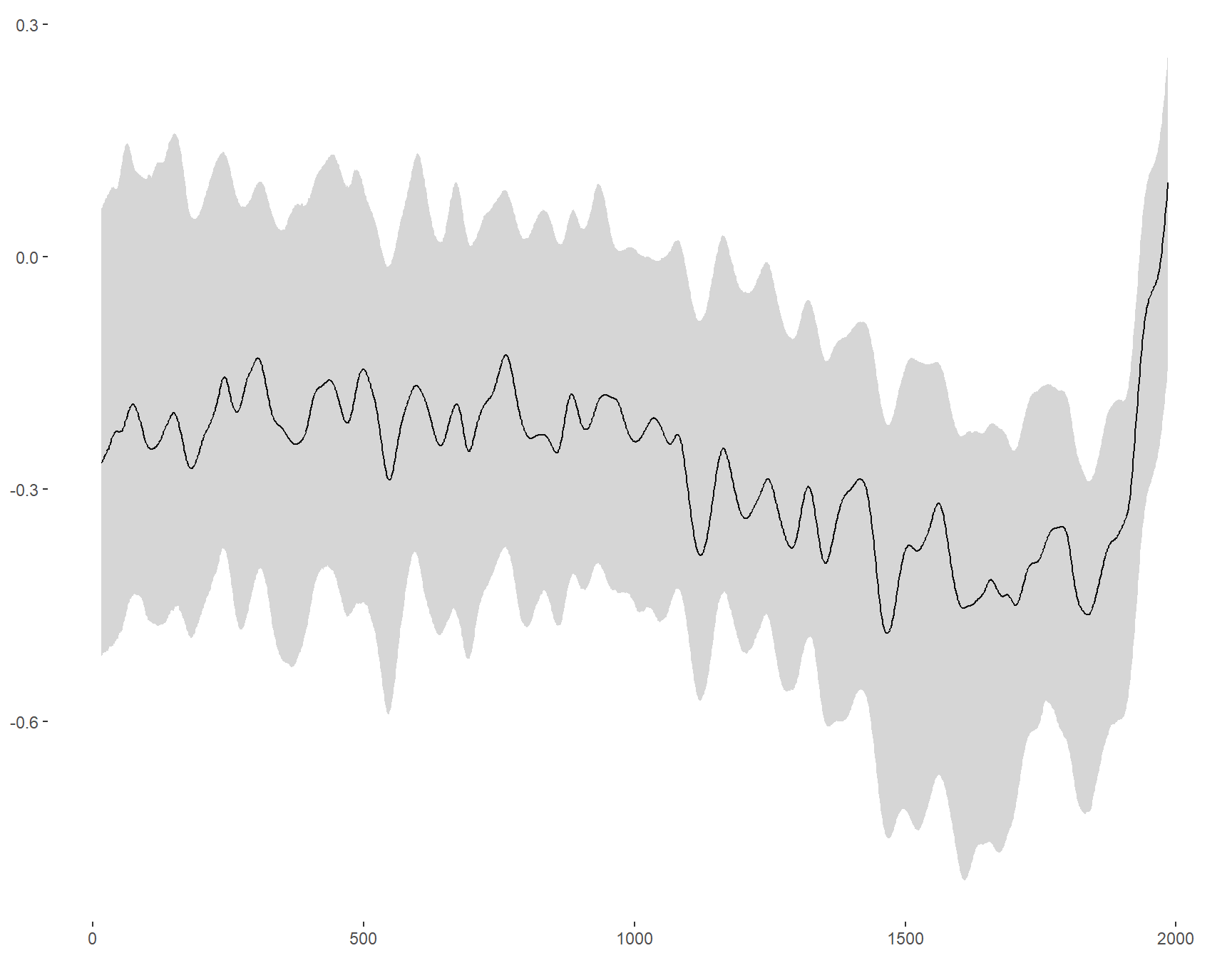
Add clean axes and labels
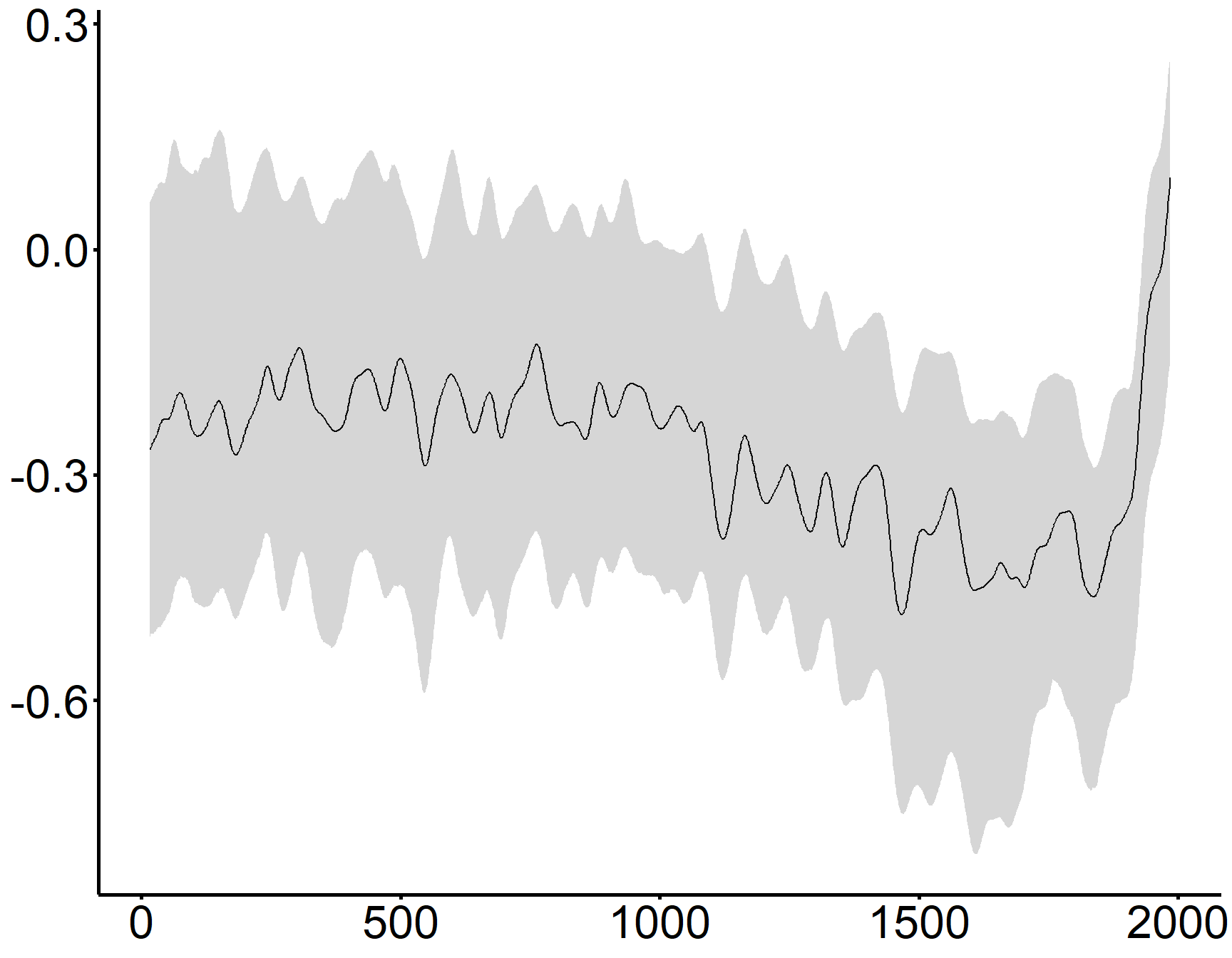
Rescale to maximise signal
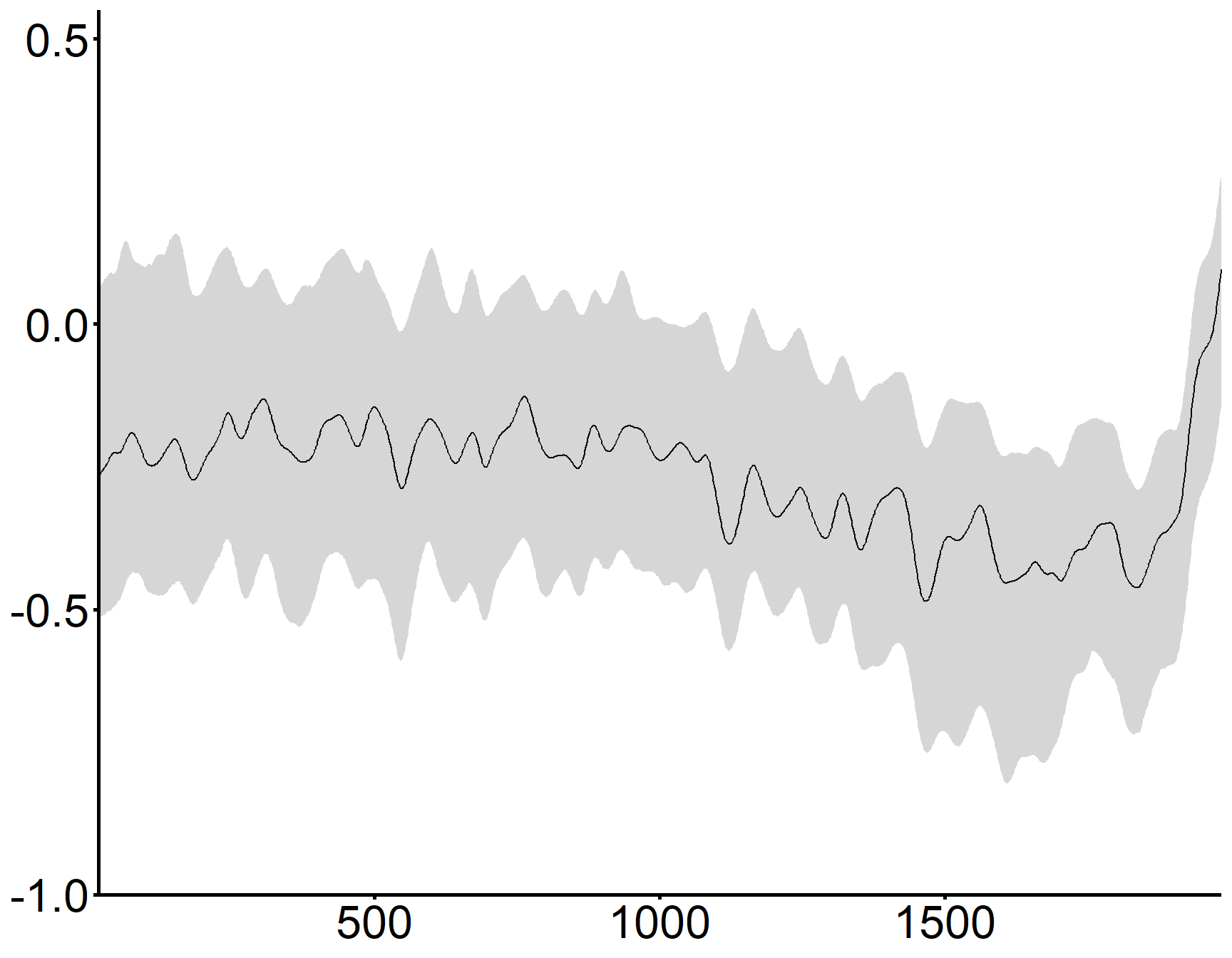
Increase legibility
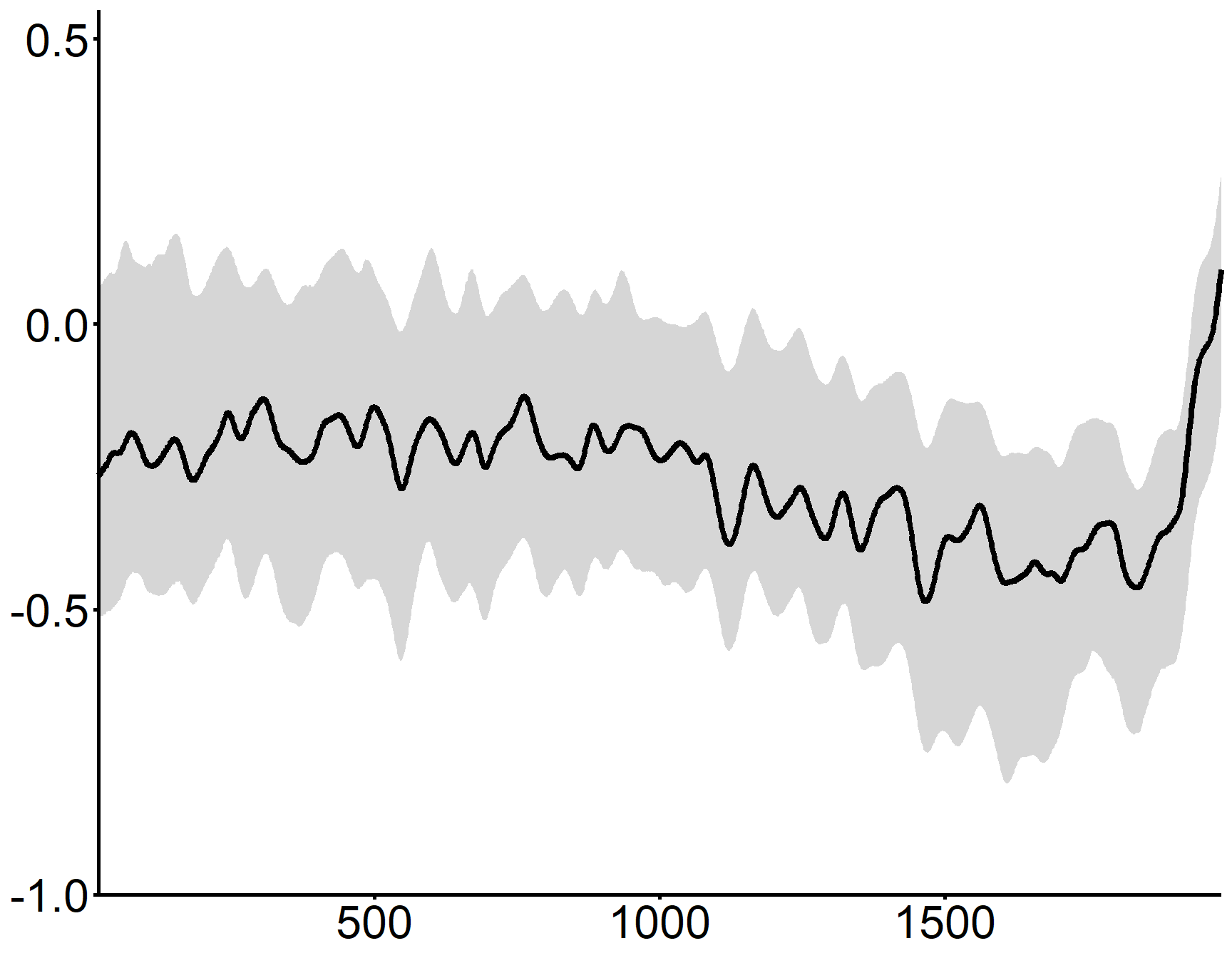
Ensure consistency with slide theme
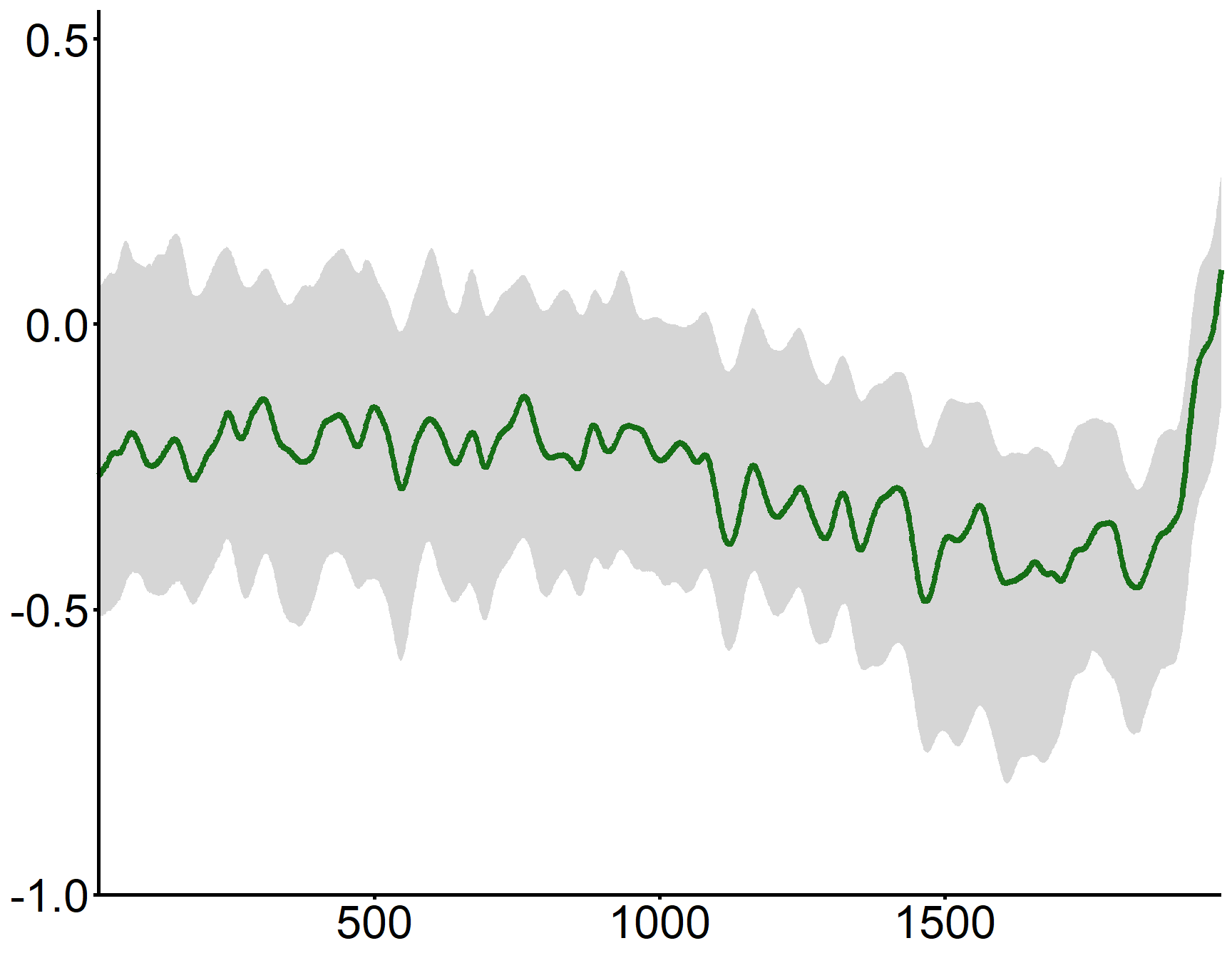
Use shading to limit the number of colors
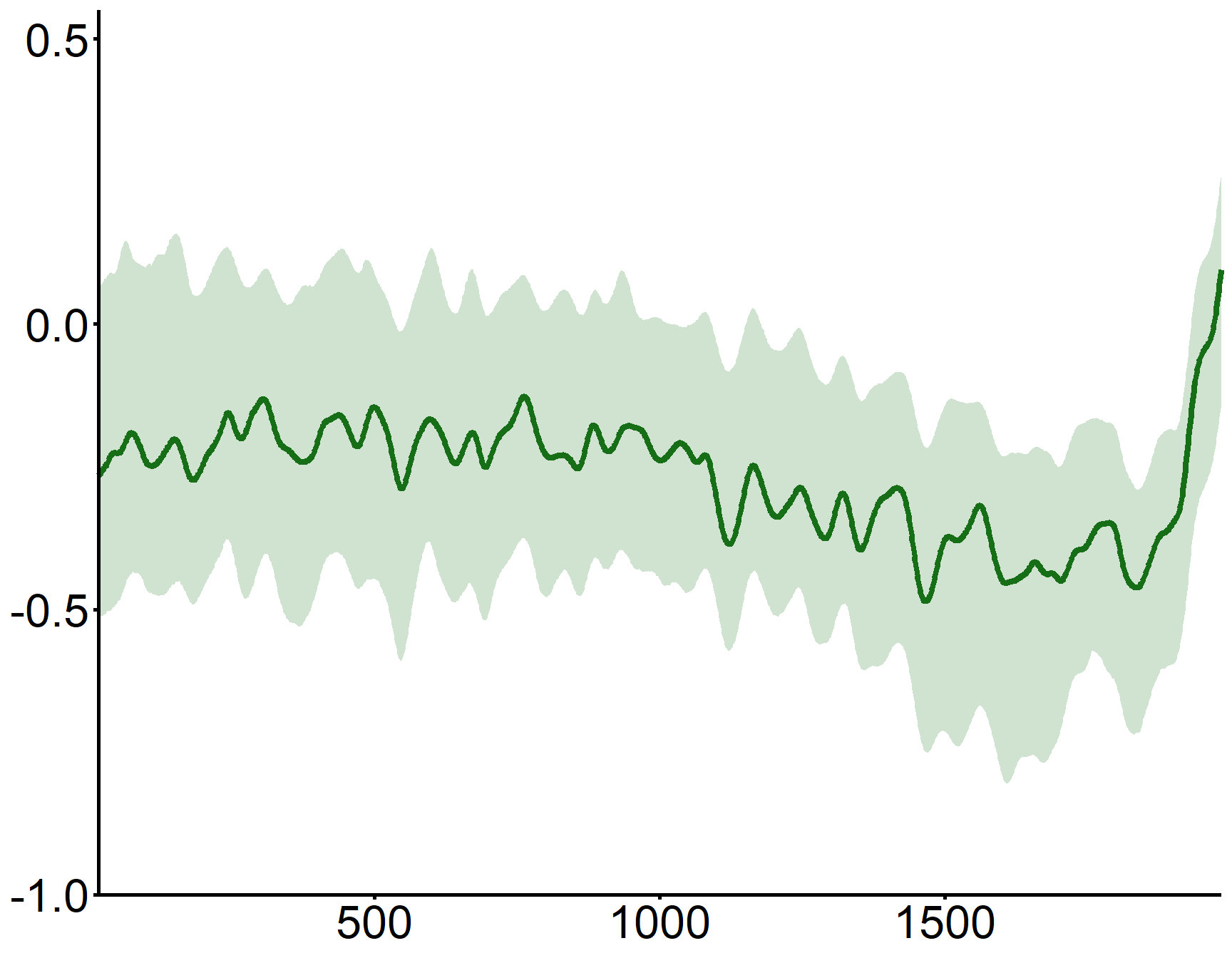
Annotate to highlight key information
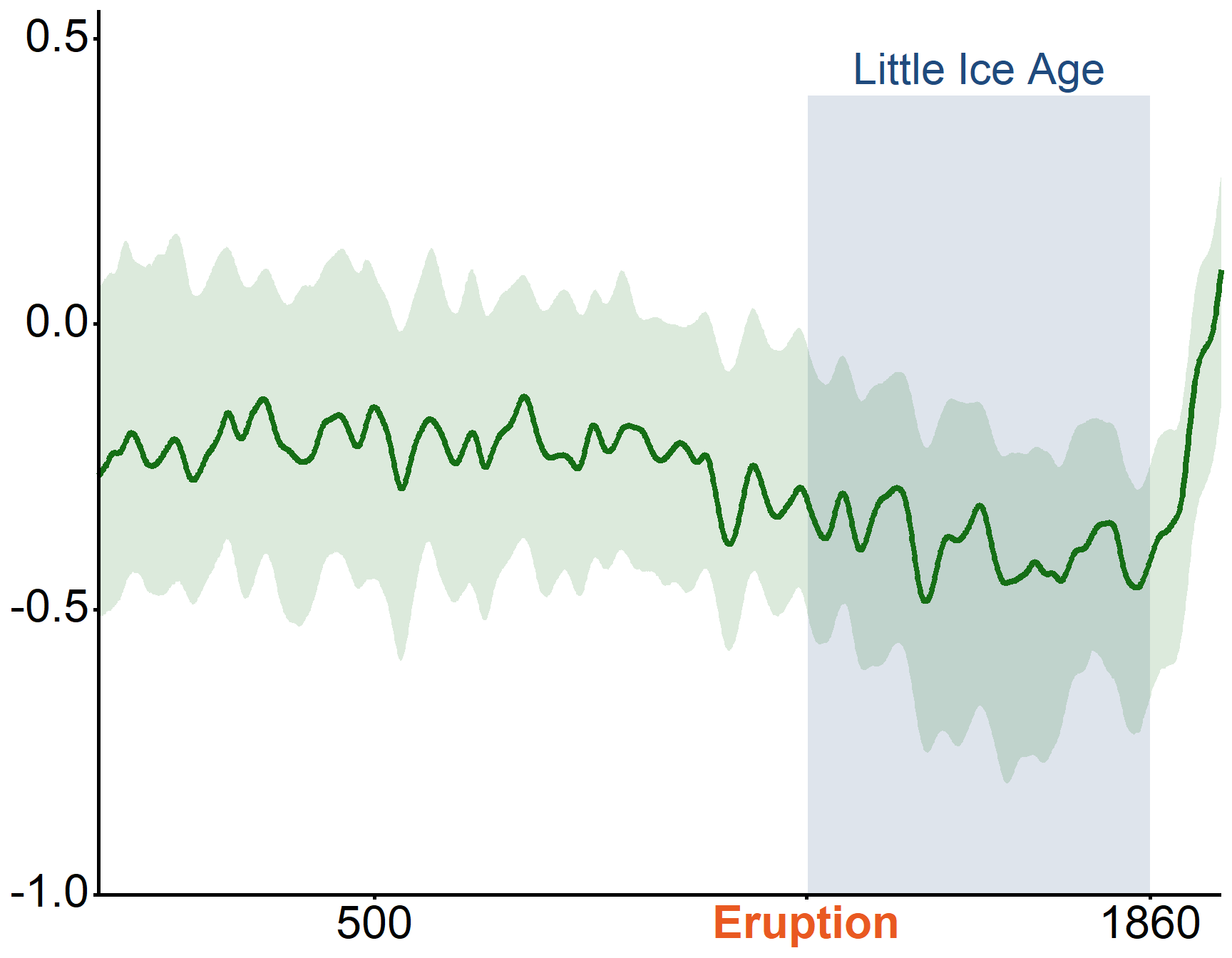
Clean up the plot again if necessary
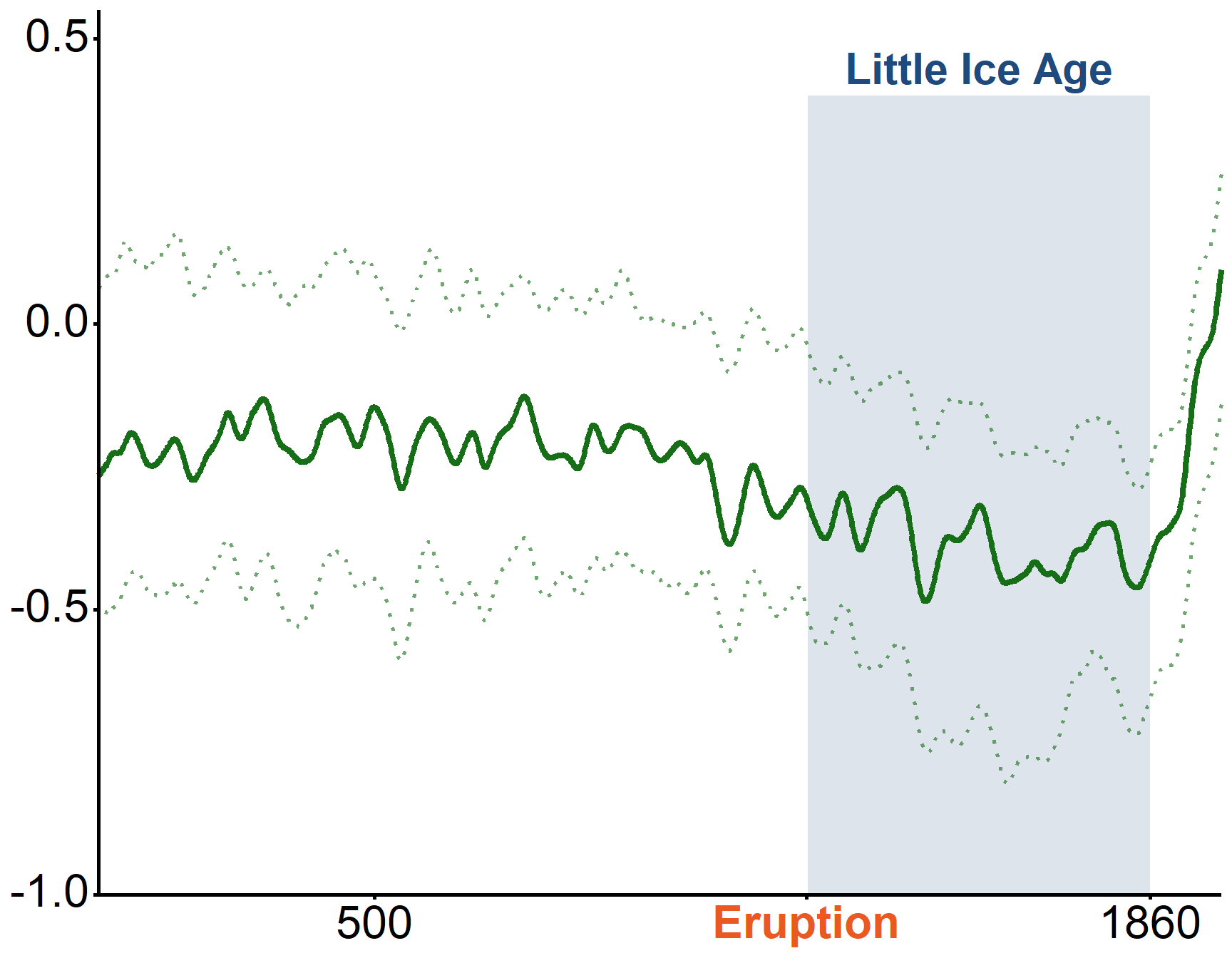
Increase resolution
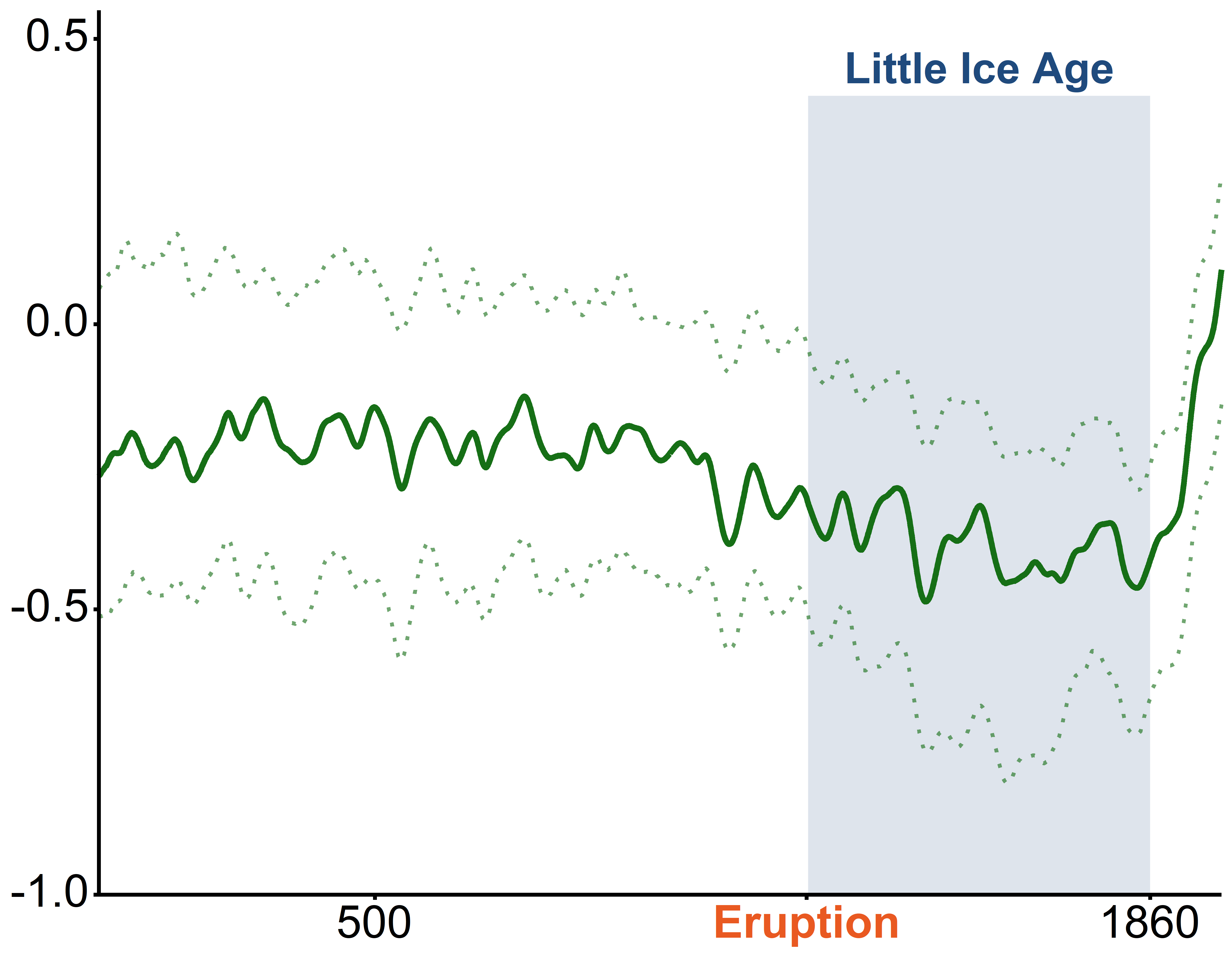
Source data
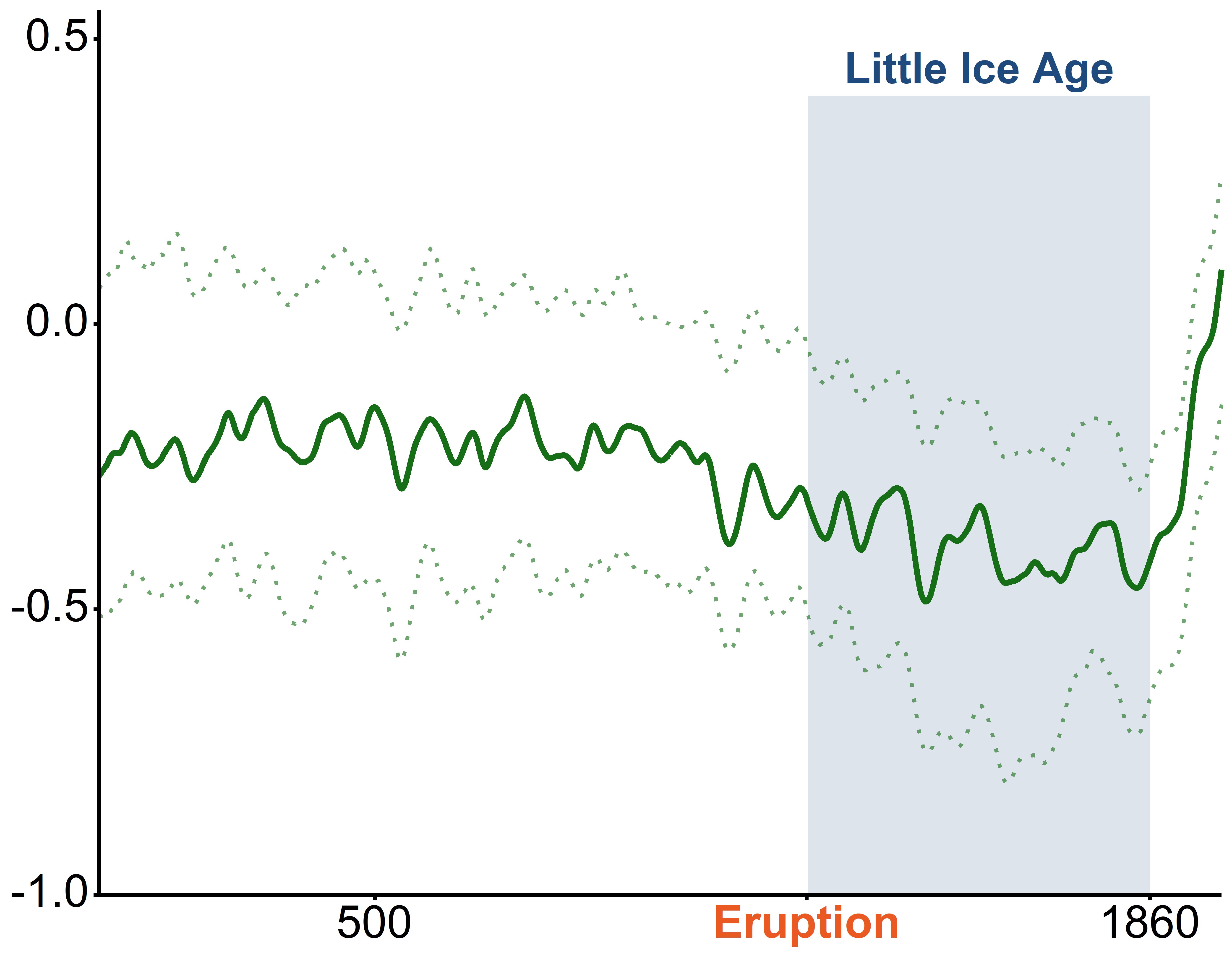
R. Neukom, 2019, 10.6084/m9.figshare.8143094

A volcanic eruption triggered an ice age in Europe
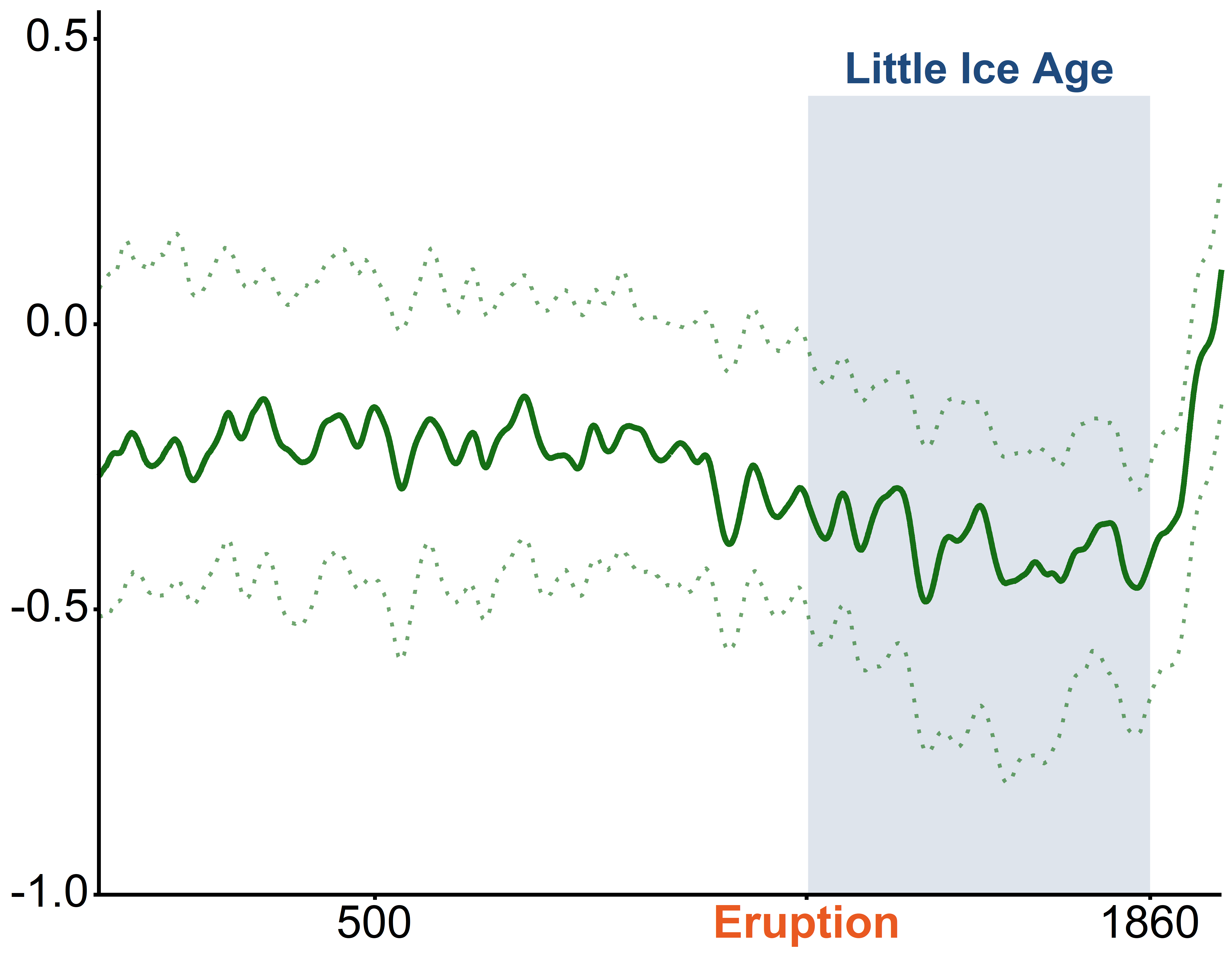
R. Neukom, 2019, 10.6084/m9.figshare.8143094

Highlighting, animations
and interactivity

The good, the bad, and the ugly

Keep figures simple and clean
to focus on the message

Let’s play with water quality data

date code_station city city_group parameter value
2009-10-08 04685003 Trignac CA de la Région Nazairienne et de l'Estuaire (CARENE) Conductivité à 25°C 9755.60
2018-12-03 04146100 Rezé Nantes Métropole Turbidité Formazine Néphélométrique 21.00
2018-04-16 04378002 Soudan CC Châteaubriant-Derval Phéopigments 1.10
2014-10-29 04146510 Nort-sur-Erdre CC d'Erdre et Gesvres Ammonium 0.06
2020-04-01 04215600 Saffré CC de Nozay Azote Kjeldahl 0.60
2018-02-28 04144900 Aigrefeuille-sur-Maine CA Clisson Sèvre et Maine Agglo Température de l'Eau 3.76

Let’s play with water quality data

Goal: I want to show where (groups of cities) the pH significantly deviated (e.g., more than 1 SD) over a year compared to other years?

Choose:

  • x and y axis
  • geometries (scatter, bar, …)
  • colors, shapes, sizes, …
  • faceting
  • any other plot elements

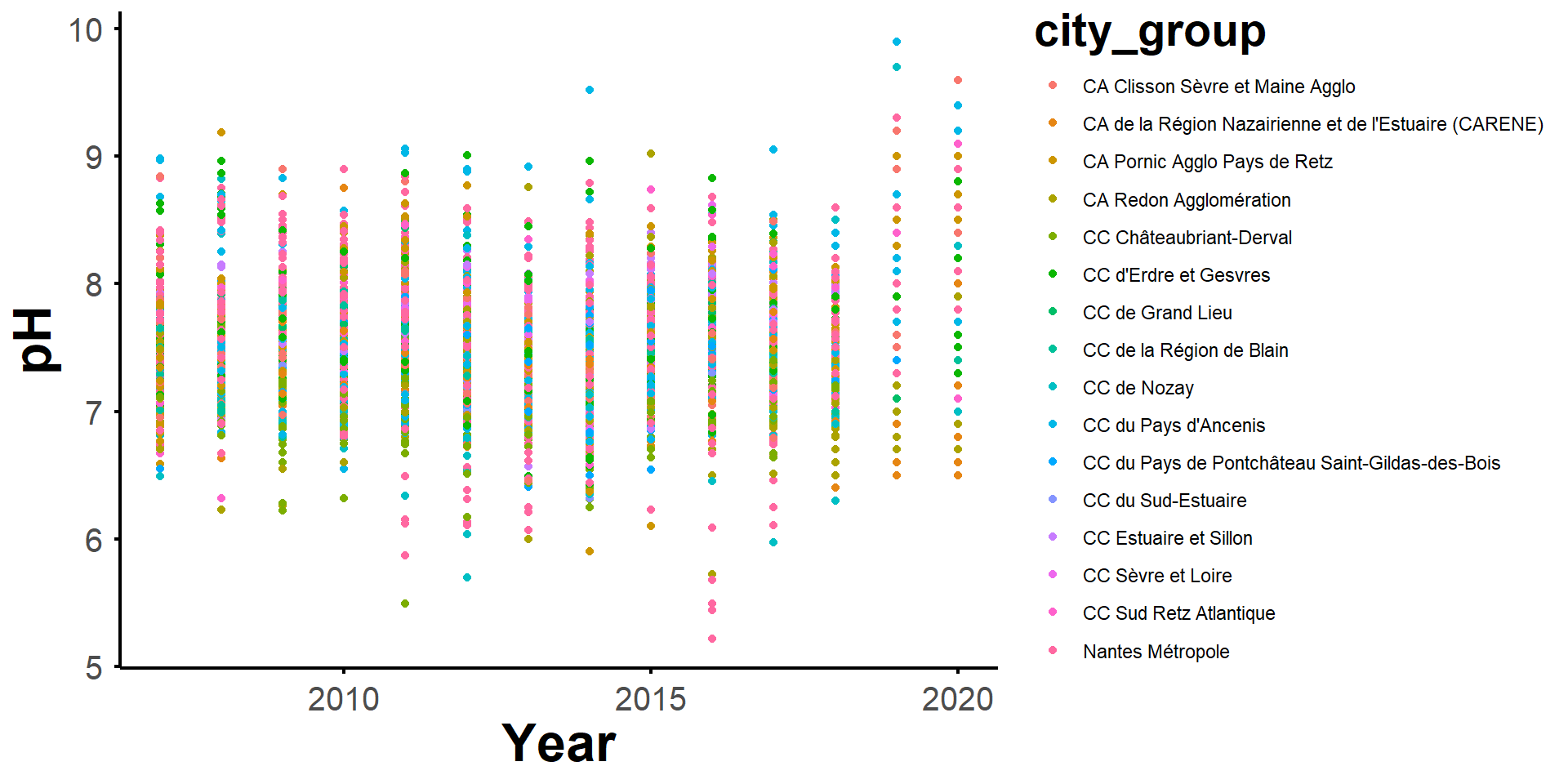
The base figure is a mess

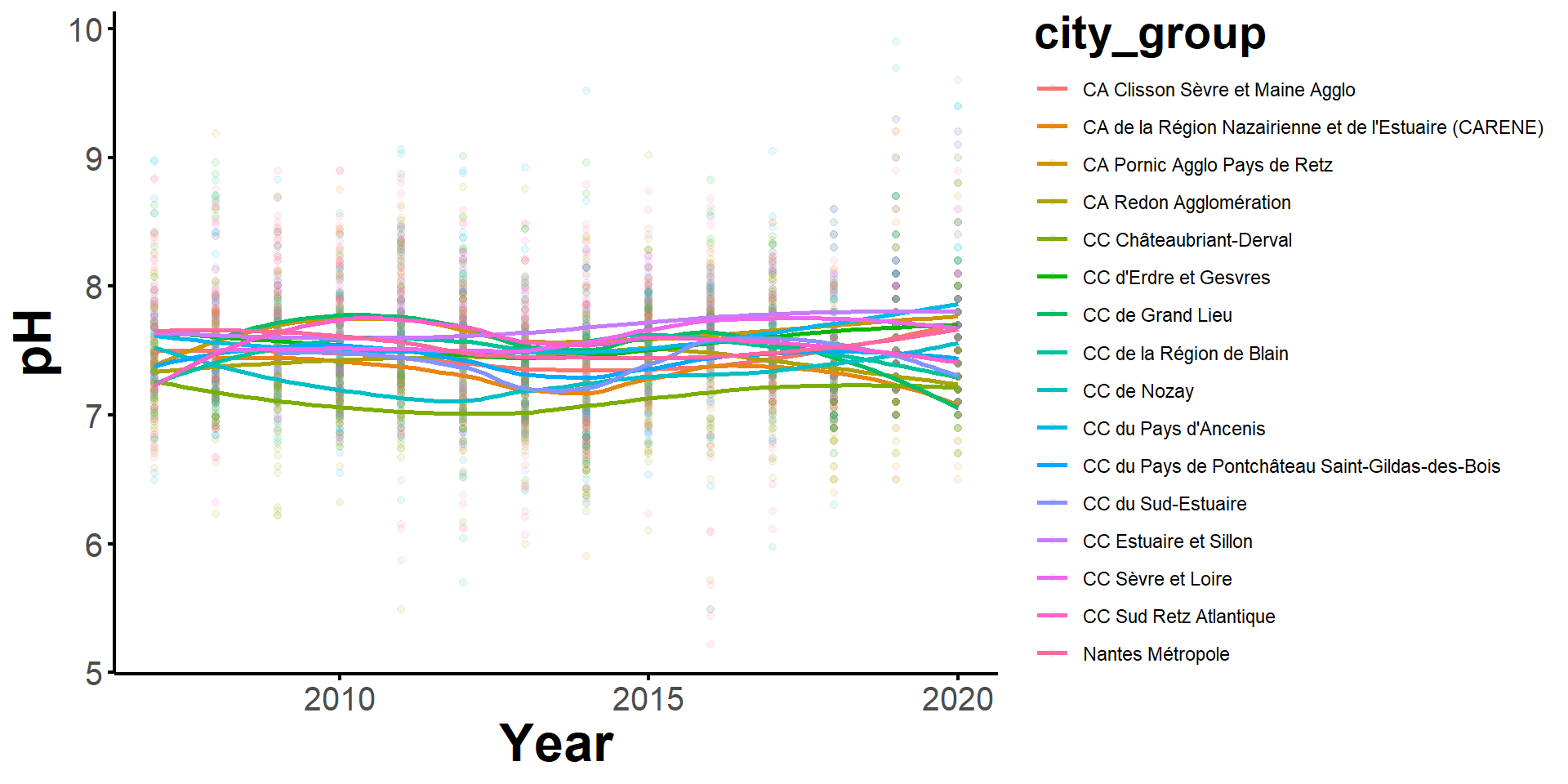
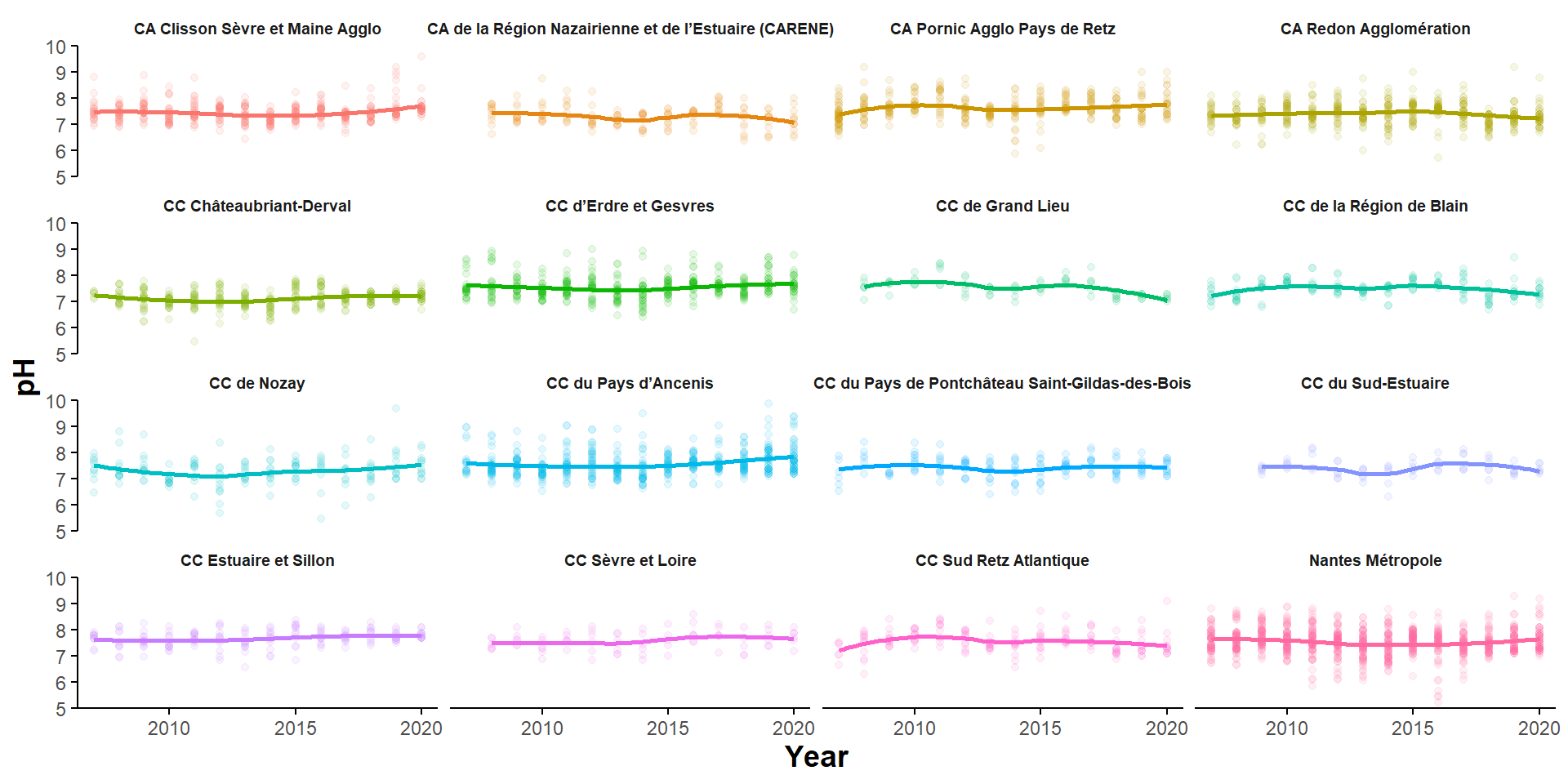
Statistical summaries may be a better approach
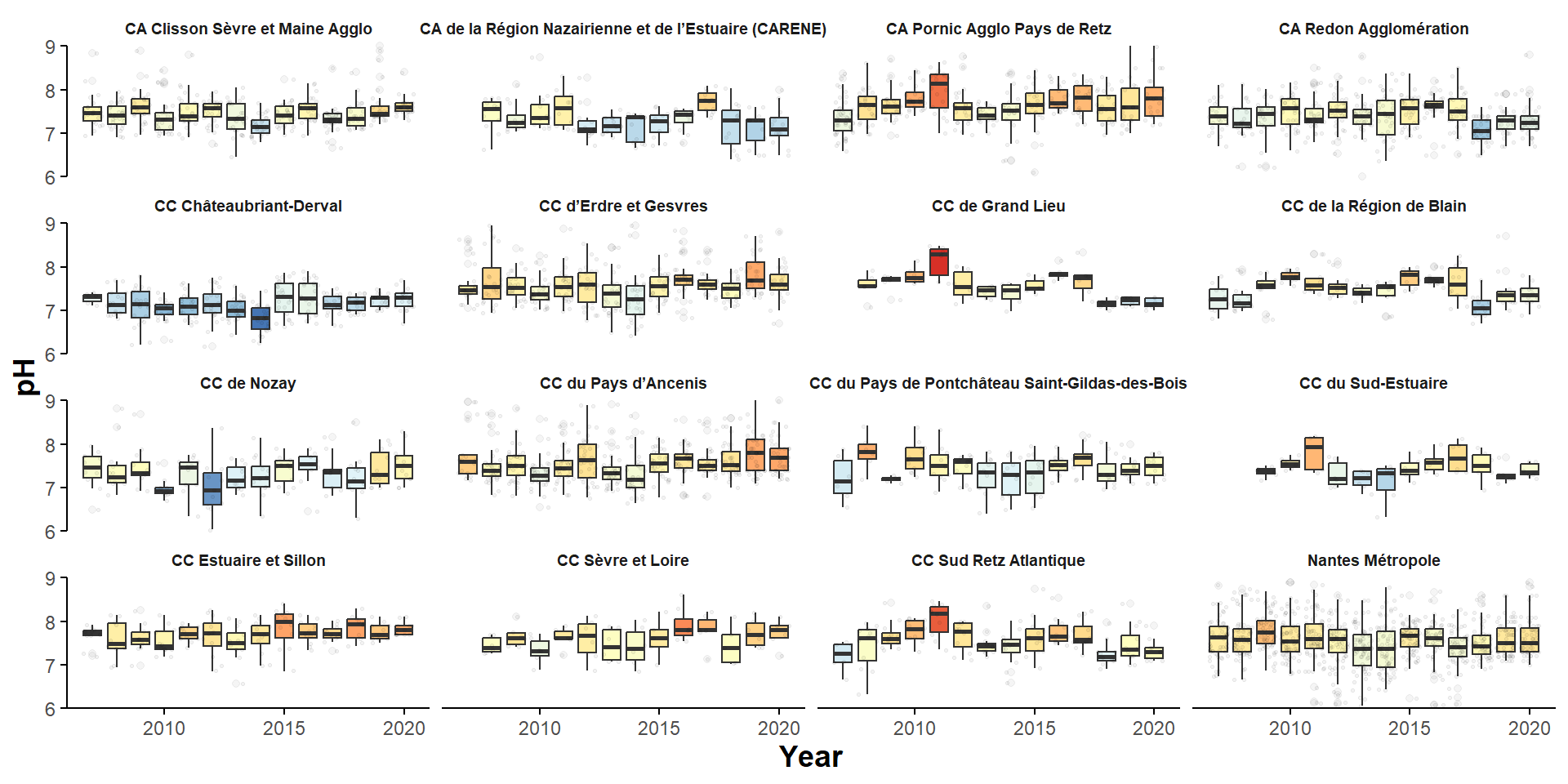
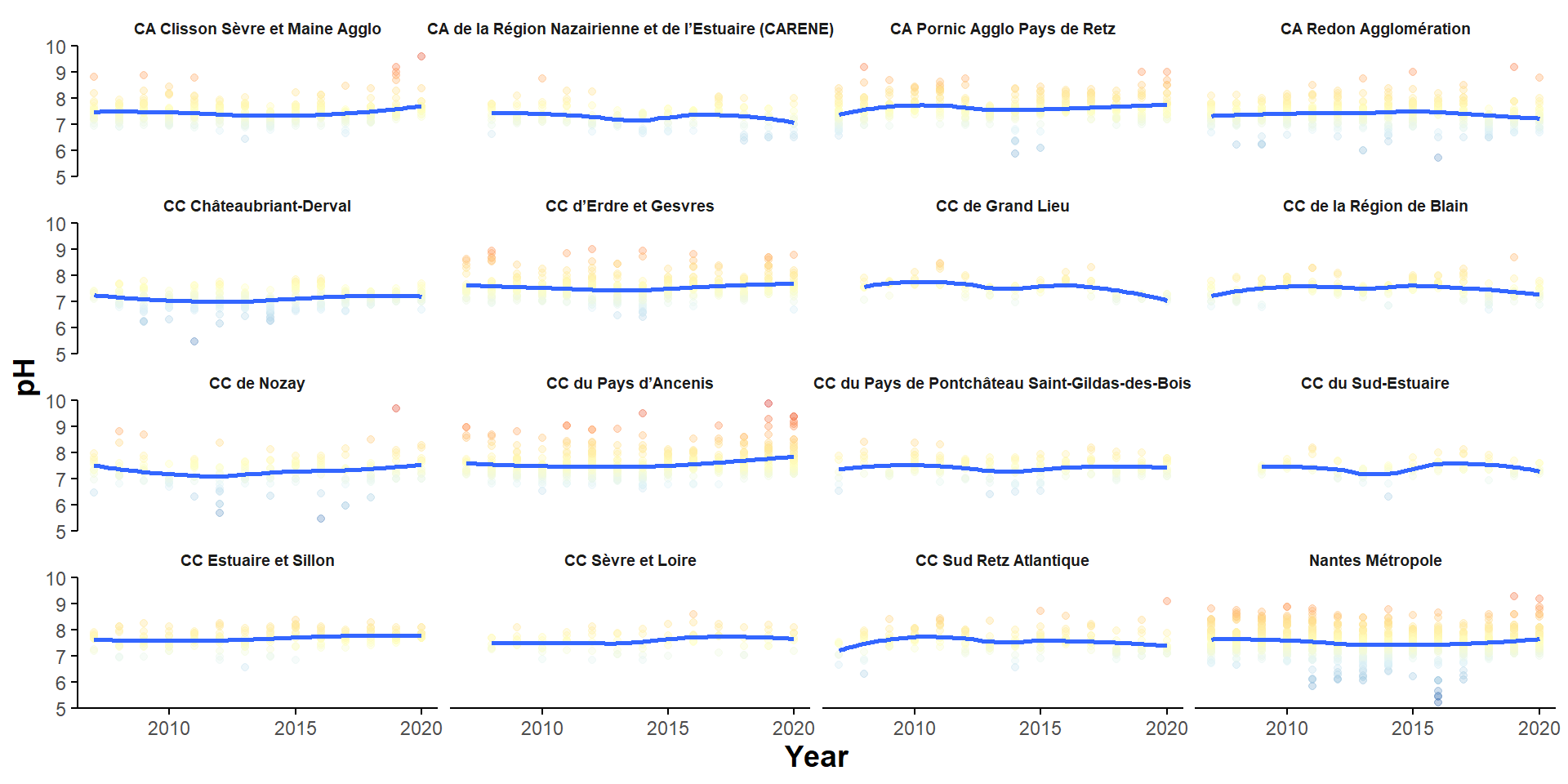
Simplification through highlighting solves the issue
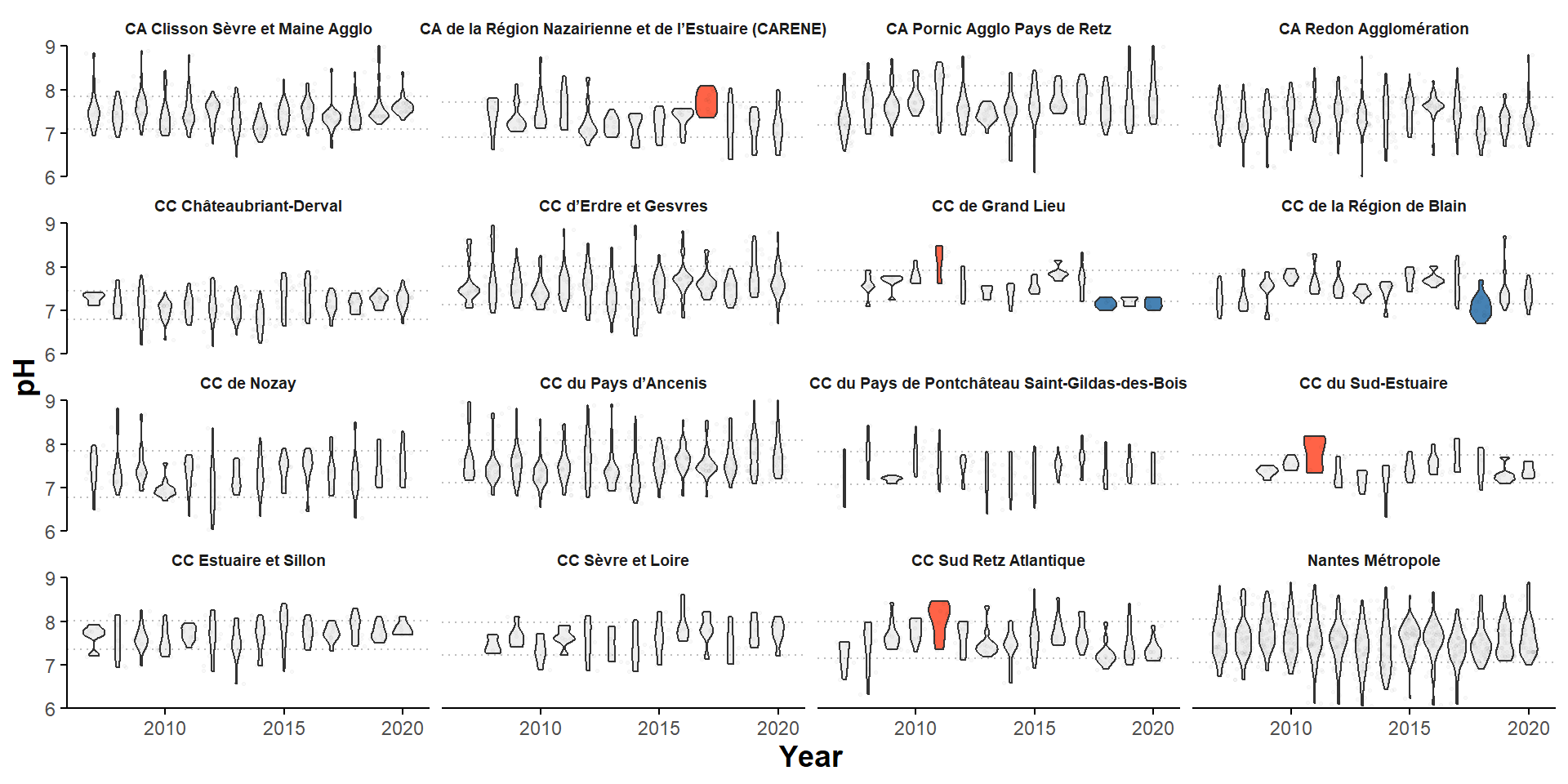
Get the message across, simplify more!
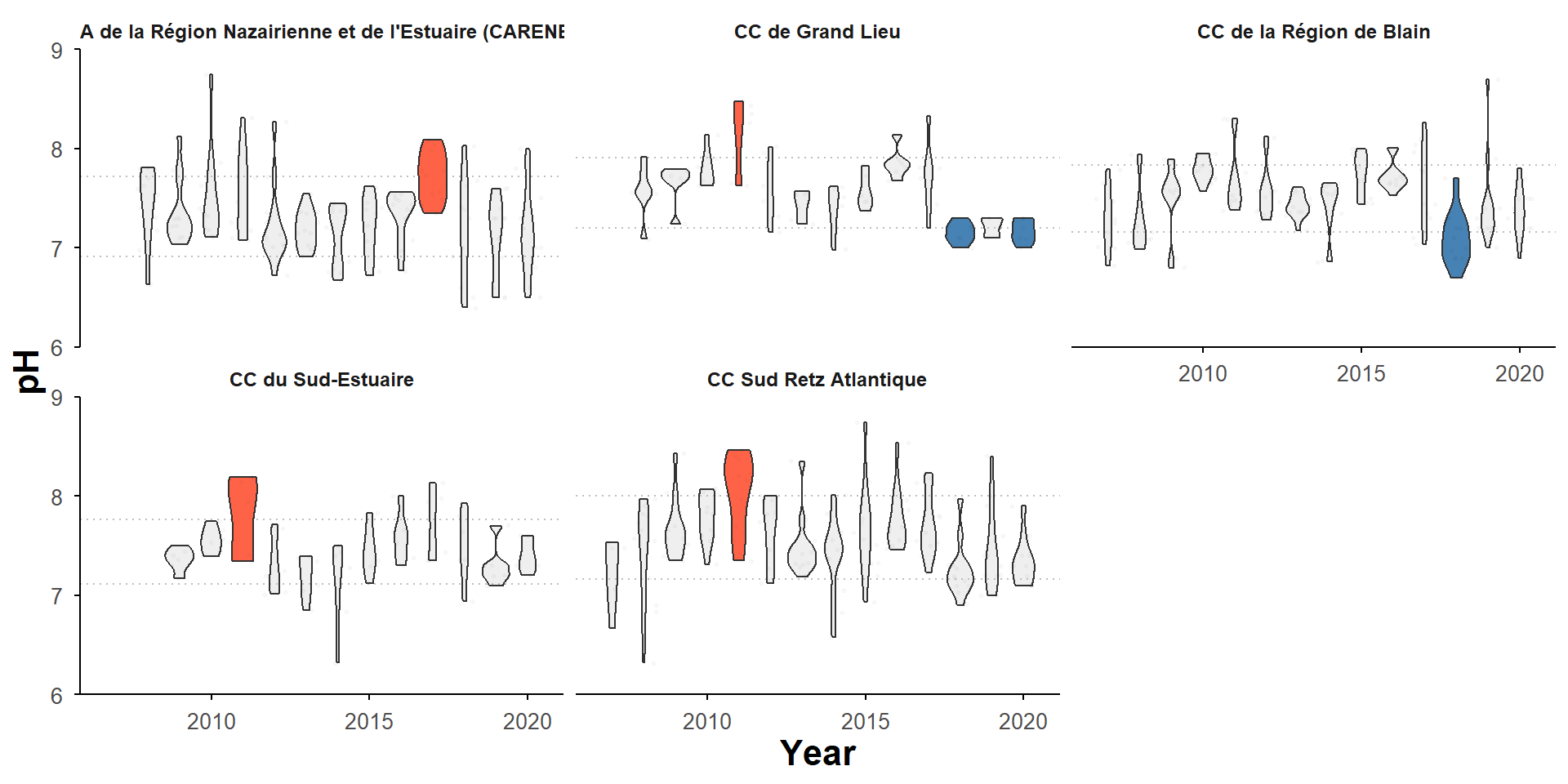
Colored violins are @ ± 1 SD from the mean

Simple animations are useful
to convey your message

Figures are not legible when there are too many series
even with direct labelling
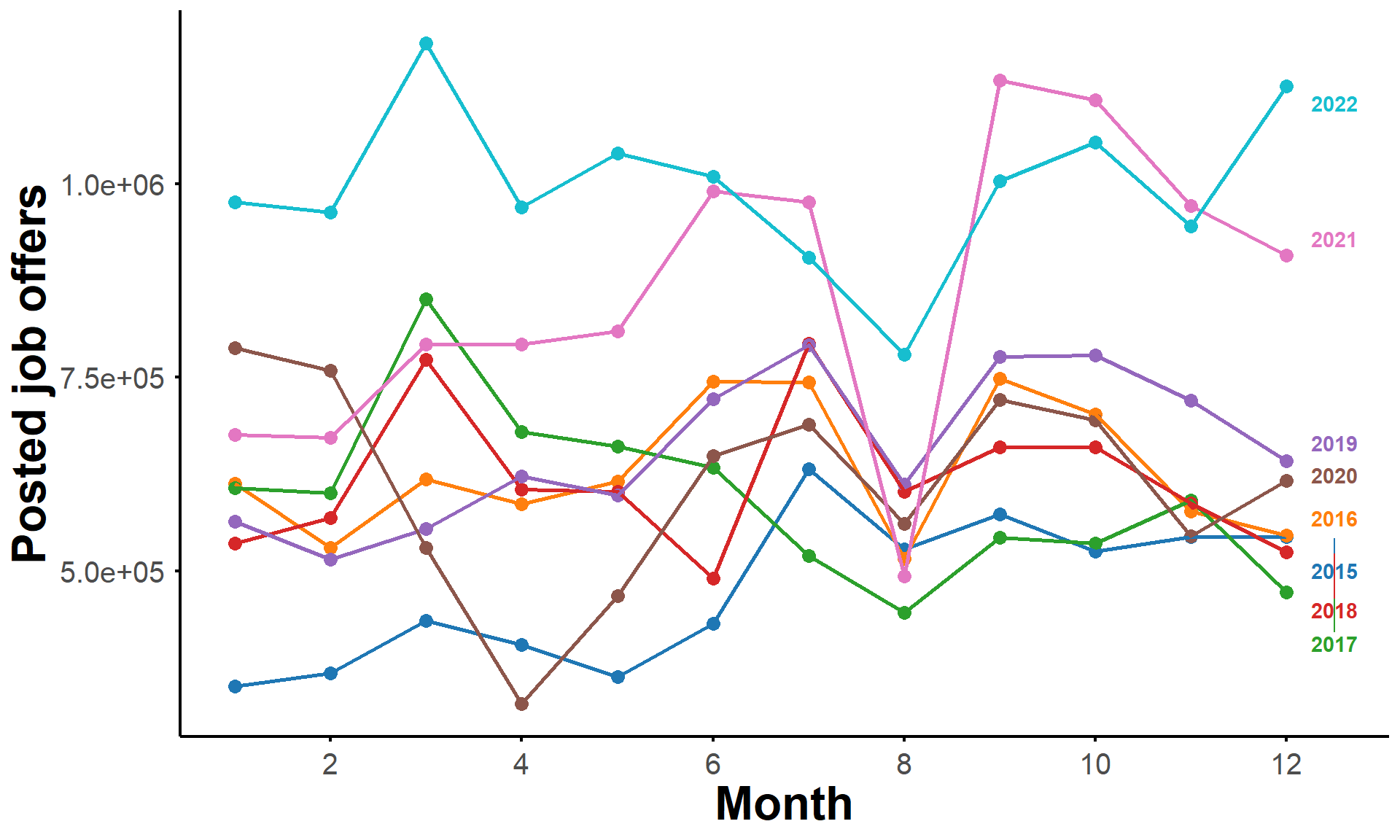
Number of job offers posted by Pôle Emploi since 2015

A simple animation with highlighting
is very effective to convey the message
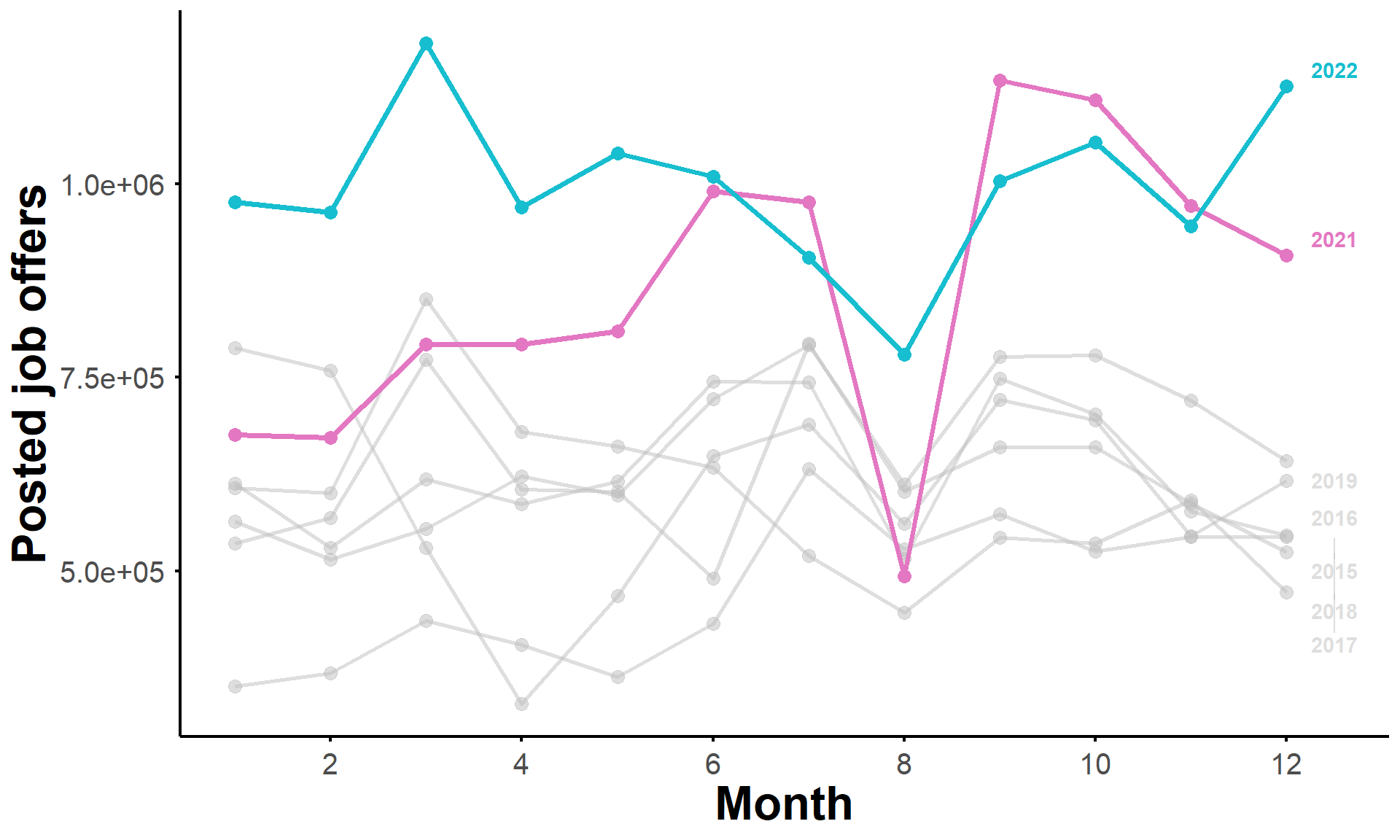
The number of job offers posted by Pôle Emploi has increased the past two years

Animations can be distracting

That looks fancy
Does it convey a message or just noise?
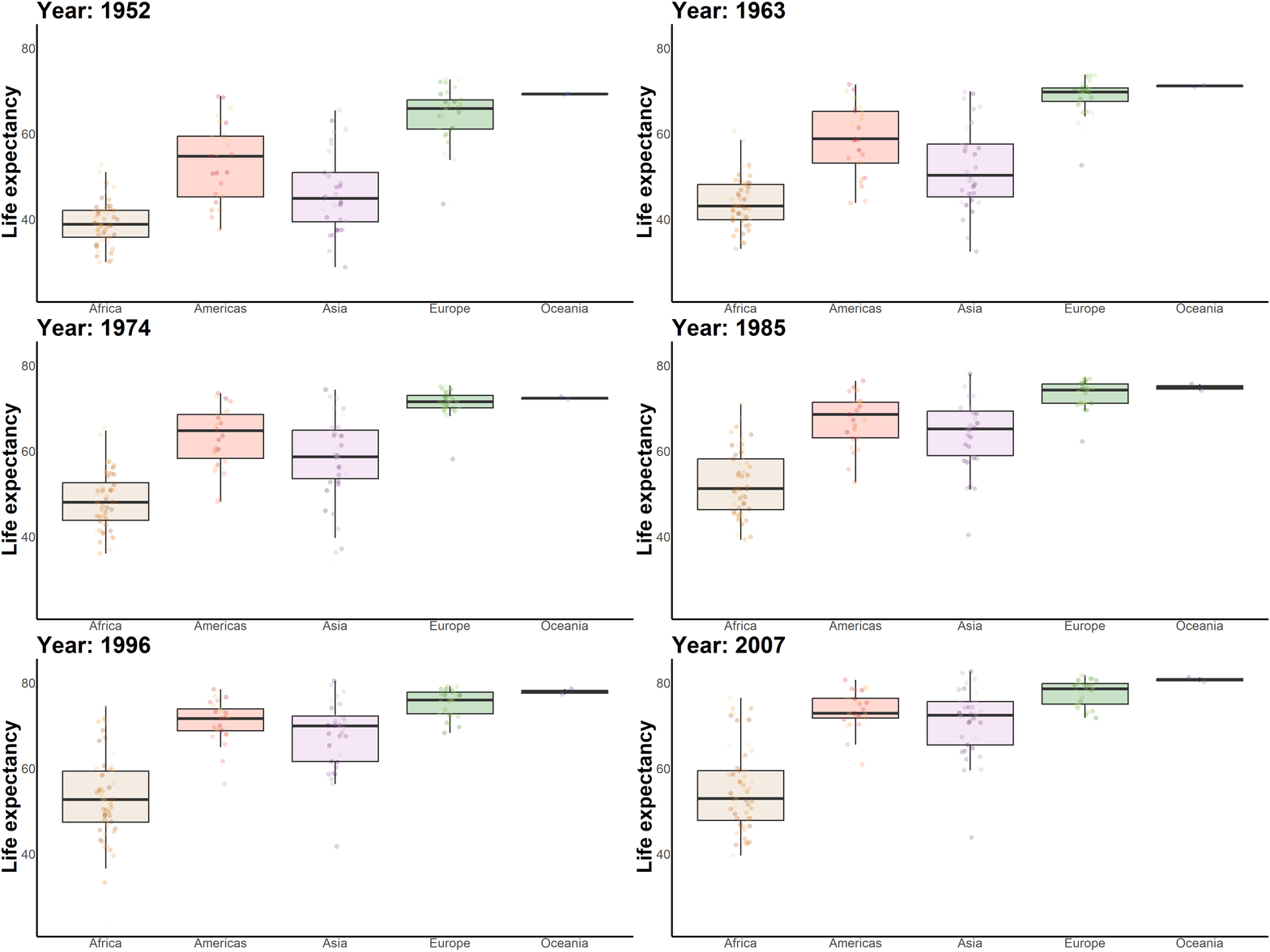
They did it because they could
not because they should
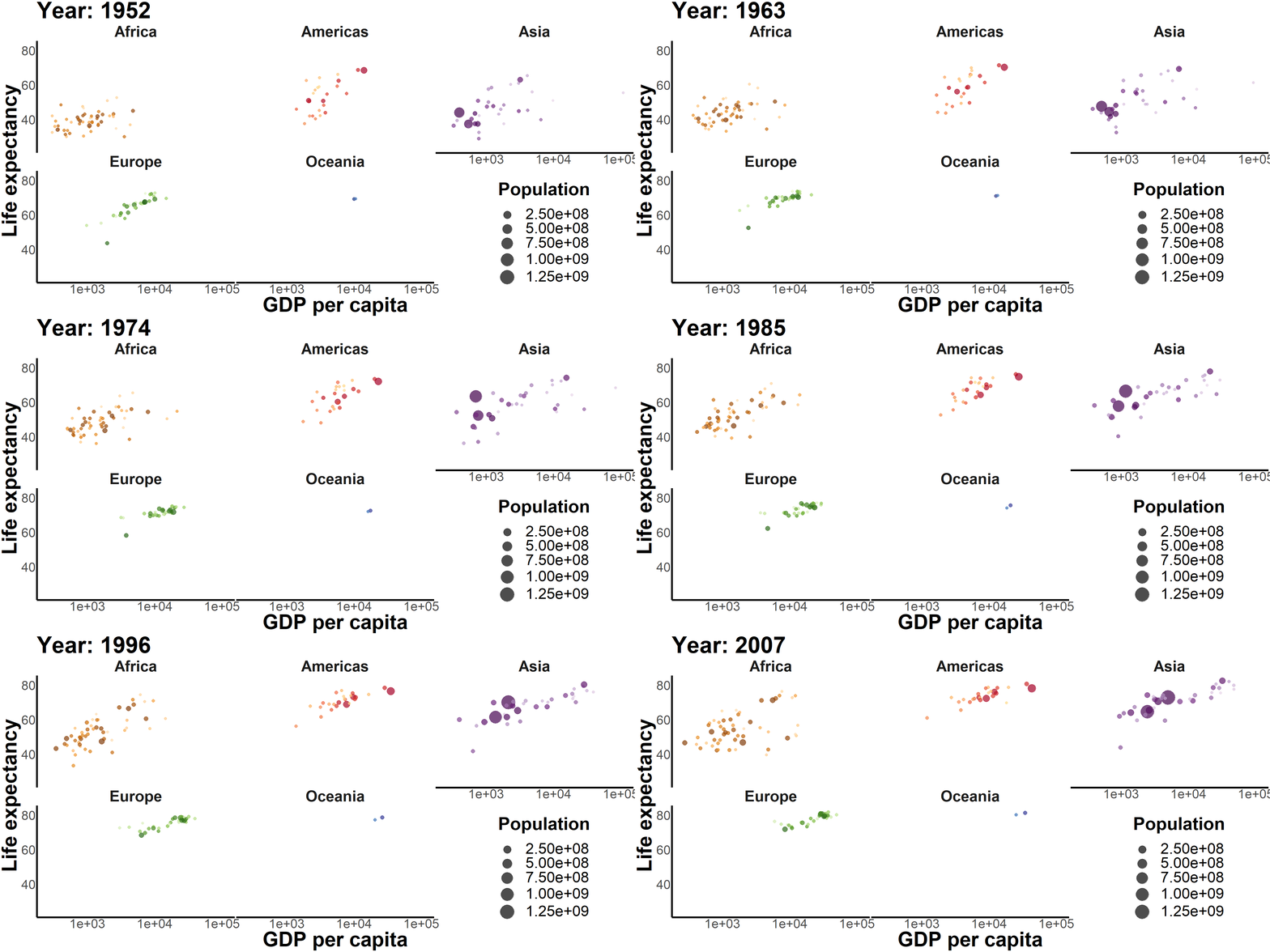
Visible technology is noise

Key messages

Optimize the slides to communicate effectively

  • Design good slides
    • Plan, structure, practice
    • … or don’t use slides
  • Each slide is a message
    • Say it
    • Show it
  • Be concise
    • Maximize the signal/noise ratio
    • Use effective redundancy
    • If something is not useful, get rid of it